

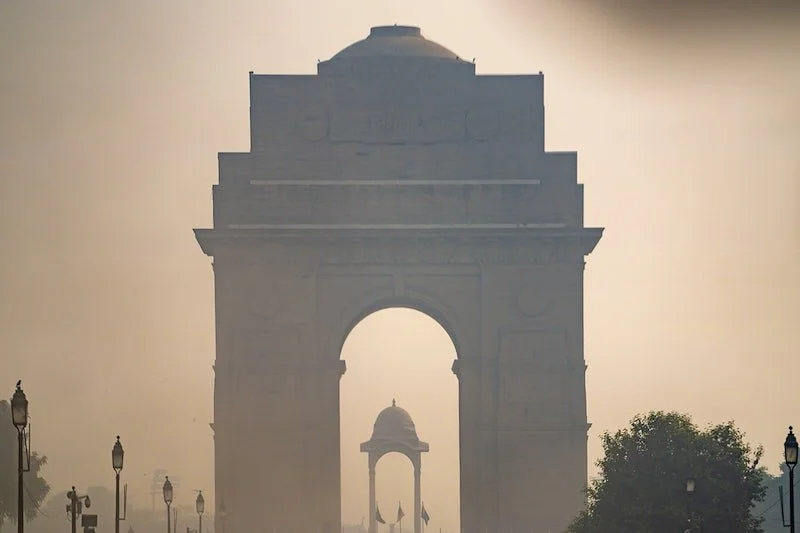
Delhi woke up on Monday, December 22, to a blanket covering of grey smog. This comes as no surprise to Delhi residents, who continue to see the air quality index worsening. The AQI, according to data released by the CPCB, remained at 366. This clearly falls into the ‘very poor’ category.
Various parts in the capital observed much more frightening air quality levels. Seven air quality stations measured ‘severe’ levels of air quality, and Narela has been identified to be the worst-affected area, measuring 418.
According to CPCB guidelines, the classification of the values of AQI is as given below:
0-50
51–100
101-200
201-300
301-400 : Very
401-500
But there is little respite on the horizon. The Air Quality Early Warning System (AQEWS) has shown that the air quality in the national capital is likely to remain in the ‘very poor’ category in the next three days. After that, there may be oscillations between the ‘very poor’ and ‘severe’ categories for almost a week.
Weather in the city is also playing a significant role in enhancing the levels of pollution. According to the India Meteorological Department, the lack of wind in the region with speeds below 10 kmph is hindering the dispersal of pollutants.
Further adding to the woes in the winters in Delhi, the minimum temperature recorded in Delhi was 9.3 degrees Celsius. This further enhanced the effects of a cold and stagnant atmosphere that leads to the entrapment of pollution in the lower level of the atmosphere.
As the levels of smog persistently remain dangerous, people are advised by health practitioners to reduce their time outside, particularly children, elderly, and those with respiratory ailments.