
Former Republican Chief Warns US Institutions “Caved In” to Trump’s Pressure
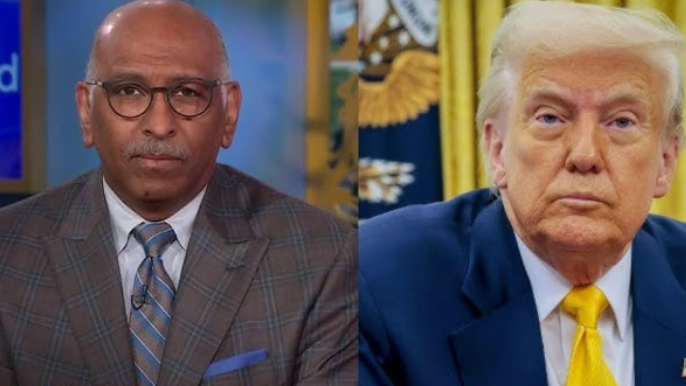
Michael Steele, former chairman of the Republican National Committee, has delivered a sharp warning about the state of American democracy, saying major US institutions surrendered far too quickly to pressure from President Donald Trump during his return to the White House.
Speaking as Trump nears one year into his second term, Steele said the most disturbing development was not the president’s confrontational governing style, but how swiftly influential sectors—including law firms, universities, and parts of the media—chose compliance over resistance.
“The shock wasn’t that Trump pushed the boundaries,” Steele said in a recent interview. “The shock was how fast institutions folded instead of standing their ground.”
Institutions Overwhelmed, Not Resilient
Steele argued that the administration adopted an aggressive, multi-front approach early on, launching legal, political, and financial pressure simultaneously. This, he said, overwhelmed established safeguards designed to protect democratic norms.
Rather than challenging the administration in court or publicly defending institutional independence, many organizations opted for negotiated settlements, policy shifts, or silence.
“This was an everything-at-once strategy,” Steele said. “For many institutions, surrender felt easier than resistance.”
Law Firms and Universities in the Crosshairs
Several prominent law firms that had challenged Trump-era policies or were linked to investigations into his political past reportedly faced threats such as revoked security clearances, loss of federal access, or cancellation of government contracts. Many reached agreements that included offering legal services aligned with administration priorities.
Elite universities were also targeted, with billions of dollars in federal funding frozen or delayed. The administration justified the actions by citing concerns ranging from campus antisemitism to diversity policies and alleged ideological bias. While many institutions agreed to oversight and reforms to restore funding, a small number resisted, becoming rare exceptions.
Steele warned that appeasement only emboldens further pressure. “Once you give in to a bully, you invite the next demand,” he said.
Signs of Public Pushback Emerging
Despite the early capitulation, Steele noted growing signs of public resistance. Mass protests under the banner of democratic accountability have taken place across major cities. In the media sector, backlash from viewers and advocacy groups has forced reversals of controversial decisions, highlighting that public opinion still holds power.
“These moments show that standing up works,” Steele said. “It just requires courage.”
Trump’s Inner Circle Keeps Momentum Alive
While Trump’s age has raised questions about stamina, Steele believes the administration’s momentum will continue through loyal advisers and ideologues who share the president’s vision.
“They know what he wants, and they’re invested in delivering it,” Steele said, referencing senior allies who continue to drive policy and messaging behind the scenes.
A Republican Voice Outside the Party Mainstream
Steele, who made history as the first Black chair of the RNC, has long been critical of Trump’s influence over the Republican Party. Though he has voted for Democratic presidential candidates in recent elections, he has not formally left the GOP, describing himself as someone keeping the door open for the party’s return to its core values.
He believes that day will come—but only after accountability.
Accountability and the 2026 Midterms
With US midterm elections approaching, Steele predicts a strong showing for Democrats, driven by voter frustration and concern over democratic norms.
“The demand for accountability is growing,” he said. “People want consequences—not just for the president, but for those who enabled abuses of power.”
Rather than focusing on impeachment, Steele emphasized oversight, investigations, and legislative checks as more effective tools.
He also pointed to recent Democratic wins in state and local elections as early indicators of shifting voter sentiment.
“These are signals,” Steele said. “Voters are paying attention—and they’re responding.”
A Test for American Democracy
As the 2026 election cycle intensifies, Steele argues the stakes extend beyond party politics.
“This is about whether institutions rediscover their backbone,” he said. “Democracy doesn’t collapse overnight. It erodes when people stop defending it.”