
Lucknow, January 10, 2026:
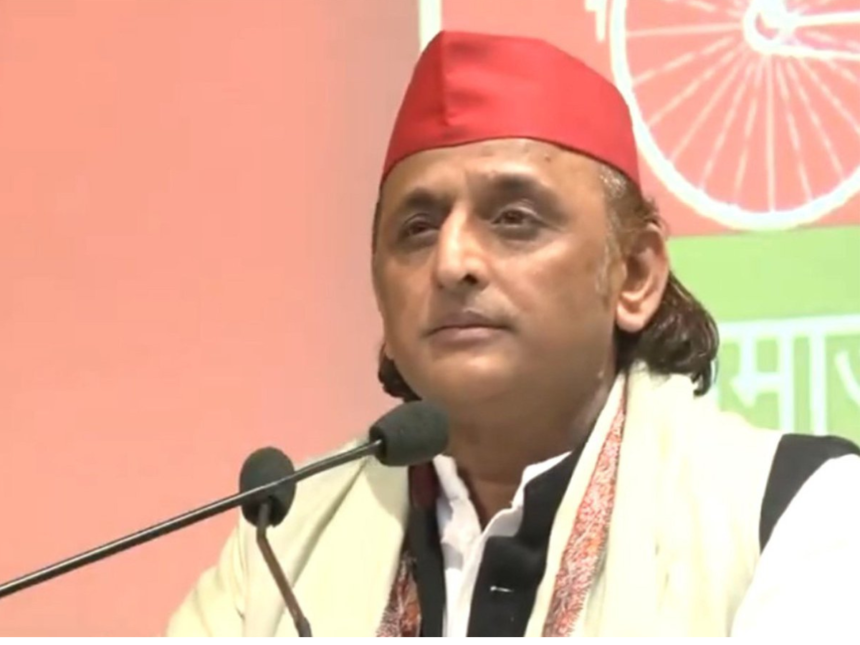
Samajwadi Party (SP) president Akhilesh Yadav on Saturday raised serious concerns over the credibility and transparency of the Election Commission of India (ECI), questioning how senior Bharatiya Janata Party (BJP) leaders appeared to know in advance the number of voters that would be removed during the Special Intensive Revision (SIR) of electoral rolls in Uttar Pradesh.
Addressing reporters in Lucknow, Mr. Yadav said the revision exercise was carried out with the participation of all political parties, including their booth-level agents (BLAs), and no objections were raised during the process. However, he expressed alarm at statements made by BJP leaders even before the draft electoral rolls were officially published.
According to Mr. Yadav, after the release of the draft voter list on January 6, he apprehended that nearly three crore voters might have been excluded. What raised more troubling questions, he said, was the fact that even before the draft was made public, the Uttar Pradesh Chief Minister had publicly claimed that around four crore voters would be removed.
“If BJP leaders already knew the exact scale of deletions before the Election Commission released any data, it raises a fundamental question—how did they know?” Mr. Yadav asked. “Such statements strike at the very credibility and independence of the Election Commission.”
Large-Scale Exclusions Raise Alarms
The Chief Electoral Officer (CEO) of Uttar Pradesh, Navdeep Rinwa, had earlier announced that following the SIR exercise, 2.89 crore voters—nearly 18.7% of the electorate—were excluded from the draft rolls. Of the 15.44 crore voters listed earlier, 12.55 crore were retained.
According to election officials, the excluded voters were removed due to reasons such as death, permanent migration, or duplicate registrations. The final electoral roll is scheduled to be published on March 6.
However, Mr. Yadav said the scale and pattern of exclusions demand greater scrutiny. He cited reports indicating that as many as three lakh voters had already been removed from a single district, adding that similar deletions were expected in at least two Assembly constituencies across different districts.
Data Discrepancies Between Elections
The former Uttar Pradesh Chief Minister also raised sharp questions over discrepancies in voter data prepared by the same Booth Level Officers (BLOs) for different elections.
“How is it possible that the total number of rural voters listed for Panchayat elections is 12.69 crore, which is higher than the total number of voters for Assembly elections across the entire state, which stands at 12.56 crore?” he asked.
Mr. Yadav further pointed out that while nearly 2.88 crore voters were removed from the draft Assembly electoral rolls, around 40 lakh new voters were reportedly added for Panchayat elections—both exercises conducted by the same BLOs.
“This contradiction cannot be brushed aside as a clerical issue. When the same officials prepare both voter lists, why is the state-level data not being released transparently?” he questioned.
Delay in Panchayat Voter List Questioned
Mr. Yadav also alleged that the final voter list for Panchayat elections was being deliberately delayed by nearly 50 days to conceal these discrepancies.
“Is the delay meant to hide the mismatch between the Assembly and Panchayat voter data?” he asked. “If everything is transparent, why withhold the information?”
Demand for Accountability
The SP chief said that the opposition could only seek answers from the Election Commission, as the ruling dispensation had already “issued instructions to increase the number of votes by 200,” a remark he said reflected political interference.
“We hope that in such a massive exercise, no genuine voter is deprived of their democratic right,” Mr. Yadav said, adding that his party was making its preparations accordingly.
The remarks come at a time when electoral integrity and voter data accuracy are under intense public scrutiny, with opposition parties demanding greater transparency and accountability from constitutional institutions ahead of crucial elections.