


If you are new to the United States or just starting your financial journey, understanding how to build a credit score in the USA is essential. Your credit score affects almost every major financial decision — renting an apartment, buying a car, getting approved for a credit card, or even setting up utilities.
This guide is written specifically for beginners and newcomers who want to understand the U.S. credit system in clear, simple language without financial jargon.
The information in this article is based on commonly followed credit-building practices in the United States and is meant for educational purposes only.
What Is a Credit Score in the USA?
A credit score is a three-digit number that represents how reliable you are as a borrower. In the United States, lenders use your credit score to decide:
-
Whether to approve your loan or credit card
-
What interest rate you will pay
-
How much credit limit you will receive
Most credit scores range from 300 to 850.
Simply put, in the USA, credit score equals financial trust.
Who Creates Credit Scores in the United States?
Your credit score is created using data collected by credit bureaus and analyzed by scoring models.
Major Credit Bureaus
The three main credit bureaus in the USA are:
Experian
Equifax
TransUnion
These bureaus collect information from lenders and generate your credit report.
Popular Credit Score Models
FICO Score (used by most banks and lenders)
VantageScore (used by many free credit apps)
The rules are similar, even if the numbers differ slightly.
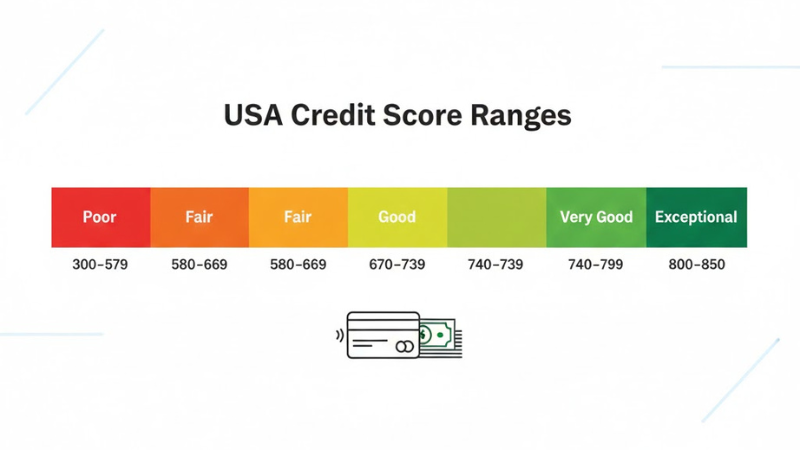
Credit Score Ranges Explained
| Credit Score | Meaning |
|---|---|
| 300–579 | Poor |
| 580–669 | Fair |
| 670–739 | Good |
| 740–799 | Very Good |
| 800–850 | Excellent |
For beginners, reaching 670+ is a strong and realistic milestone.

“Most lenders in the U.S. use your FICO Score to determine your
How Credit Score Is Calculated in the USA
Your credit score is calculated using five main factors.
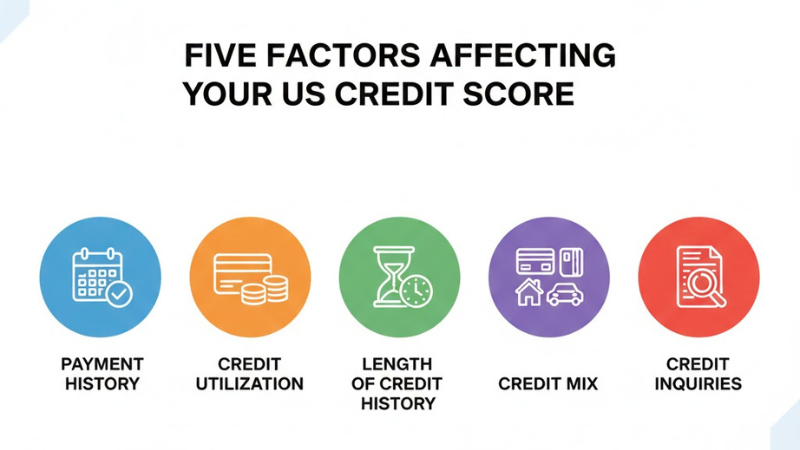
1. Payment History (35%)
This is the most important factor.
Lenders check:
On-time payments
Late payments
Collections or defaults
Even a single late payment can lower your score.
In practice, setting up automatic payments is one of the simplest ways beginners protect their credit score from accidental late payments.
2. Credit Utilization (30%)
Credit utilization shows how much of your available credit you are using.
Example:
If your limit is $1,000 and you use $300, your utilization is 30%.
Best practice:
-
Below 30% is good
-
Below 10% is ideal
3. Length of Credit History (15%)
This measures how long you’ve been using credit.
Older accounts help more
Beginners start lower because time matters
4. Credit Mix (10%)
A mix of credit types helps slightly:
Credit cards
Auto loans
Student loans
Beginners do not need all of these.
5. New Credit Inquiries (10%)
Each credit application creates ahard inquiry.
Too many inquiries in a short time can temporarily lower your score.
Why Credit Score Is Important in the USA
Your credit score affects:
Renting an apartment
Car loans and interest rates
Credit card approvals and rewards
Utility deposits
Some job background checks
In the U.S., a good credit score directly impacts daily life
How to Build Credit Score in the USA From Zero
If you have no credit history, follow these steps.
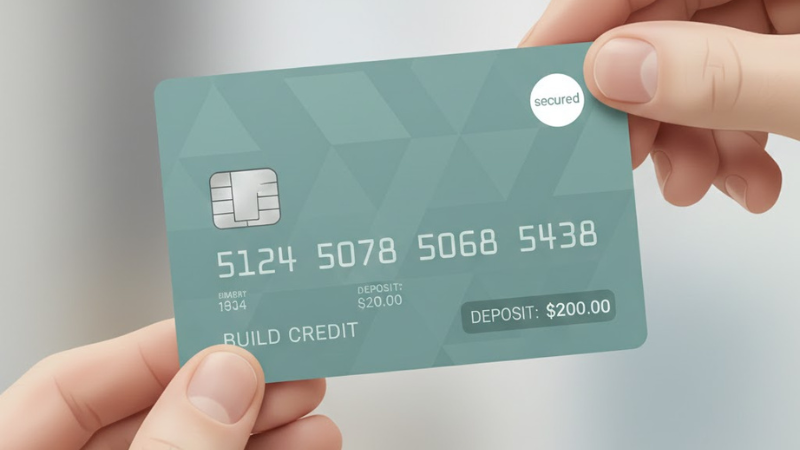
1. Get a Secured Credit Card
A secured credit card is the safest way to start.
Requires a refundable deposit
Deposit becomes your credit limit
Reports activity to credit bureaus
For example, many first-time credit users start with a small secured credit card limit and focus on keeping usage low while paying every bill on time.
To learn more about your rights as a consumer, you can visit the Consumer Financial Protection Bureau (CFPB) (https://www.consumerfinance.gov/consumer-tools/credit-reports-and-scores/) website.”
2. Use the Card Responsibly
-
Use only 10–30% of the limit
-
Avoid maxing out the card
3. Pay Every Bill on Time
Payment history matters more than anything else.
Auto-pay for at least the minimum amount helps avoid mistakes.
4. Become an Authorized User (Optional)
A trusted person can add you to their credit card.
If their account is well-managed, it may help your score.
5. Avoid Multiple Applications
Start with one card. Build history slowly.
How Long Does It Take to Build Credit in the USA?
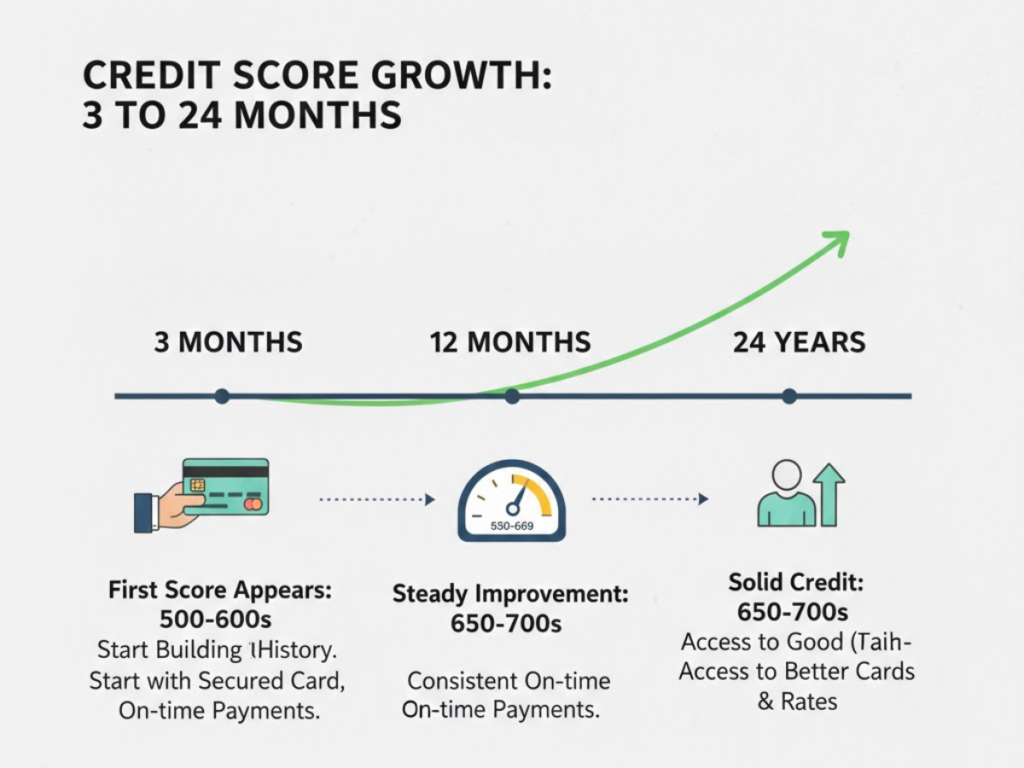
First score: 3–6 months
Good score (670+): 6–12 months
Very good score (740+): 12–24 months
Credit building rewards consistency, not speed.

Common Credit Score Mistakes Beginners Make
Missing due dates
Closing old accounts early
Applying for many cards at once
Using full credit limits
Ignoring credit reports
Avoiding these mistakes saves time and effort.
How to Check Your Credit Score for Free
Checking your own credit score does not lower it.
You can use:
Bank or credit card apps
Free credit monitoring tools
Annual credit report services
You are entitled to a free credit report every year from the three major bureaus via AnnualCreditReport.com (https://www.annualcreditreport.com/)
FAQs: Credit Score in the USA
Is 700 a good credit score in the USA?
Yes. A score of 700 is considered good and qualifies for most loans.
Can immigrants build credit in the USA?
Yes. Many immigrants start with secured cards or authorized-user accounts.
Does using a debit card build credit?
No. Debit cards do not affect credit scores.
How often does a credit score update?
Most scores update monthly, depending on lender reporting.
Can paying rent improve credit score?
Only if rent payments are reported to credit bureaus through a reporting service.
Conclusion
Building a credit score in the USA is not complicated, but it requires discipline and patience. Start small, pay on time, keep balances low, and avoid unnecessary applications.
If you are just starting out, consistency matters more than speed when it comes to building a strong credit score in the USA.
“Disclosure: This post contains official links to financial institutions to help you find accurate information.”