

Israel has reportedly raised its security preparedness amid growing concerns that the United States could intervene in Iran, where the country is facing its most significant wave of anti-government protests in years. According to multiple Israeli sources familiar with internal security discussions, the situation has prompted close monitoring in Jerusalem as Washington’s rhetoric toward Tehran grows increasingly assertive.
The unrest in Iran, driven by deep public dissatisfaction with economic hardship, political repression, and governance issues, has drawn sharp reactions from U.S. President Donald Trump. In recent days, Trump has issued a series of warnings to Iran’s leadership, cautioning them against using violent measures to suppress demonstrators. Over the weekend, he went further, stating that the United States stands “ready to help,” a remark that has intensified speculation about potential American involvement.
Israeli officials, while not publicly commenting on specific operational steps, have acknowledged that the evolving situation has triggered heightened alertness within the country’s security establishment. Three Israeli sources, who participated in security consultations held over the weekend, said authorities are preparing for a range of scenarios, including indirect consequences of any U.S. action against Iran.
Regional Sensitivities After Recent Conflict
The developments come less than a year after Israel and Iran were locked in a brief but intense 12-day conflict in June. During that confrontation, the United States sided with Israel, joining airstrikes against Iranian-linked targets. Although the fighting stopped short of a wider regional war, it significantly escalated tensions and underscored how quickly events involving Iran can ripple across the Middle East.
Given that backdrop, Israeli strategists are especially cautious. Any U.S. move—whether diplomatic, economic, or military—could provoke retaliation from Iran or its regional allies, potentially placing Israel in the line of fire even if it remains on the sidelines.
Despite the elevated alert, Israel has not publicly indicated that it intends to directly intervene in Iran’s internal unrest. Officials are aware that overt involvement could strengthen hardliners in Tehran or provide justification for a crackdown on protesters by framing the demonstrations as foreign-instigated.
High-Level U.S.–Israel Discussions
The possibility of American intervention was reportedly discussed during a phone call on Saturday between Israeli Prime Minister Benjamin Netanyahu and U.S. Secretary of State Marco Rubio. An Israeli source familiar with the conversation confirmed that Iran was among the issues addressed, particularly in light of the ongoing protests and Washington’s increasingly vocal stance.
While a U.S. official confirmed that the call took place, they declined to provide details about the topics discussed. This lack of transparency has only fueled speculation among analysts about whether the two allies are coordinating responses to potential developments in Iran.
Israel and the United States have long shared intelligence and strategic coordination regarding Iran, particularly concerning Tehran’s nuclear ambitions and missile capabilities. However, direct U.S. intervention tied to internal Iranian protests would represent a significant shift, one that could have unpredictable consequences for regional stability.
Iran’s Protests and Global Attention
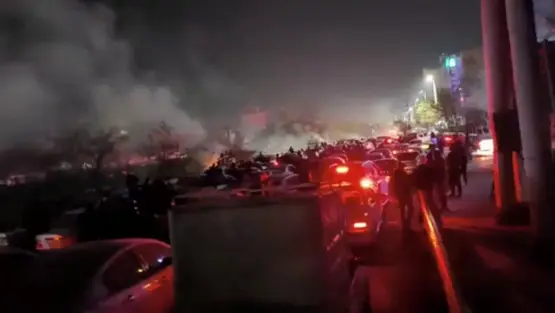
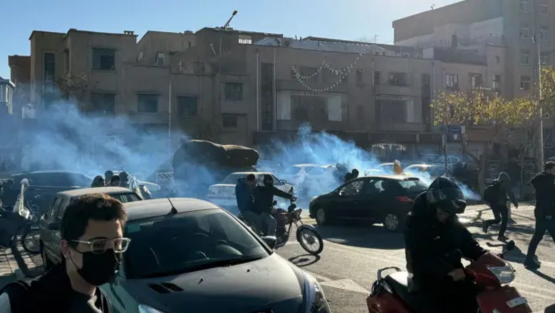
The protests gripping Iran are among the most serious challenges the country’s leadership has faced in recent years. Demonstrations have erupted across multiple cities, reflecting widespread frustration over inflation, unemployment, corruption, and political restrictions. While Iranian authorities have attempted to downplay the scale of the unrest, videos circulating on social media suggest a sustained and determined movement.
President Trump’s public comments have added an international dimension to the crisis. By openly warning Iran’s rulers and offering support to protesters, the U.S. administration has signaled a readiness to apply pressure beyond traditional diplomatic channels. Iranian officials, in turn, have accused Washington of interference and warned of severe consequences if foreign powers attempt to exploit the situation.
Israel’s Strategic Calculations
For Israel, the turmoil inside Iran presents both risks and uncertainties. On one hand, prolonged internal instability could weaken a long-standing adversary that Israel views as an existential threat. On the other, sudden shifts in Iran’s political or security posture could lead to unpredictable actions, including attempts to divert attention through external aggression.
Israel’s primary concerns remain Iran’s nuclear program and its development of ballistic missiles, which Israeli leaders have repeatedly described as unacceptable. Tehran’s support for armed groups hostile to Israel across the region also remains a major source of tension.
n a recent interview with The Economist, Prime Minister Netanyahu underscored these concerns while stopping short of endorsing any action related to Iran’s internal protests. He warned that Iran would face “horrible consequences” if it were to attack Israel, reinforcing Israel’s deterrence message. Referring to the unrest, Netanyahu added that developments inside Iran should be closely watched, suggesting a wait-and-see approach.
A Delicate Balance
Analysts say Israel’s current posture reflects a delicate balancing act. Remaining vigilant without appearing provocative allows Israel to protect its interests while avoiding escalation. At the same time, close coordination with Washington ensures that Israeli leaders are not caught off guard by any sudden policy shifts from their most important ally.
The situation also highlights the broader complexity of Middle Eastern geopolitics, where internal unrest in one country can quickly intersect with regional rivalries and global power dynamics. Any U.S. action, even if limited in scope, could alter calculations not only in Tehran but across the region.
Looking Ahead
As protests continue in Iran and Washington’s statements remain closely scrutinized, Israel is likely to maintain its high-alert stance. Officials are expected to continue monitoring intelligence assessments and regional signals while avoiding public commitments that could inflame tensions.
Whether the U.S. ultimately chooses to intervene remains uncertain. What is clear, however, is that the unfolding crisis has placed Iran once again at the center of regional and international attention, with Israel watching closely from the sidelines, prepared for whatever consequences may follow.