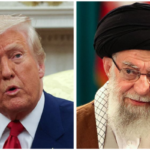


Dubai / Washington — Iran said on Monday that it is keeping communication channels open with the United States, even as President Donald Trump considers how to respond to a violent crackdown on protests that has shaken the country.
The unrest has become one of the most serious challenges to Iran’s clerical leadership since the 1979 Islamic Revolution. What began as anger over rising prices has now spread into nationwide calls for political change, putting Iran’s rulers under heavy pressure at home and abroad.
Iran Confirms Direct and Indirect U.S. Contacts
Iran’s foreign ministry said that messages are being exchanged with Washington through direct and indirect channels.
Spokesperson Esmaeil Baghaei said Iran’s Foreign Minister Abbas Araqchi remains in contact with U.S. special envoy Steve Witkoff. He added that Switzerland, a long-time intermediary between the two countries, is also helping pass messages.
“Iran has never left the negotiating table,” Baghaei said, while also accusing Washington of sending mixed signals and lacking seriousness.
Araqchi later told foreign diplomats in Tehran that Iran is prepared to defend itself if needed, but remains open to dialogue.
Trump Signals Talks — But Warns of Action
On Sunday, President Trump said Iran had reached out to discuss its nuclear program and that a meeting may take place soon. However, he warned that the United States may act before any talks if violence against protesters continues.
“We might meet with them,” Trump said. “But we may have to act because of what is happening.”
Trump also said he is in contact with Iranian opposition figures and is closely watching developments inside the country.
A meeting with senior U.S. advisers is expected this week to review possible options, according to U.S. officials.
Hundreds Dead as Protests Spread Nationwide
A U.S.-based rights group reported that nearly 500 protesters and dozens of security personnel have been killed since demonstrations began in late December. More than 10,000 people have reportedly been arrested.
Iran has not released official figures, and independent verification is difficult due to strict internet restrictions imposed in recent days.
Despite past protest waves being crushed, this time the movement has spread across many parts of the country, including major cities and smaller towns.
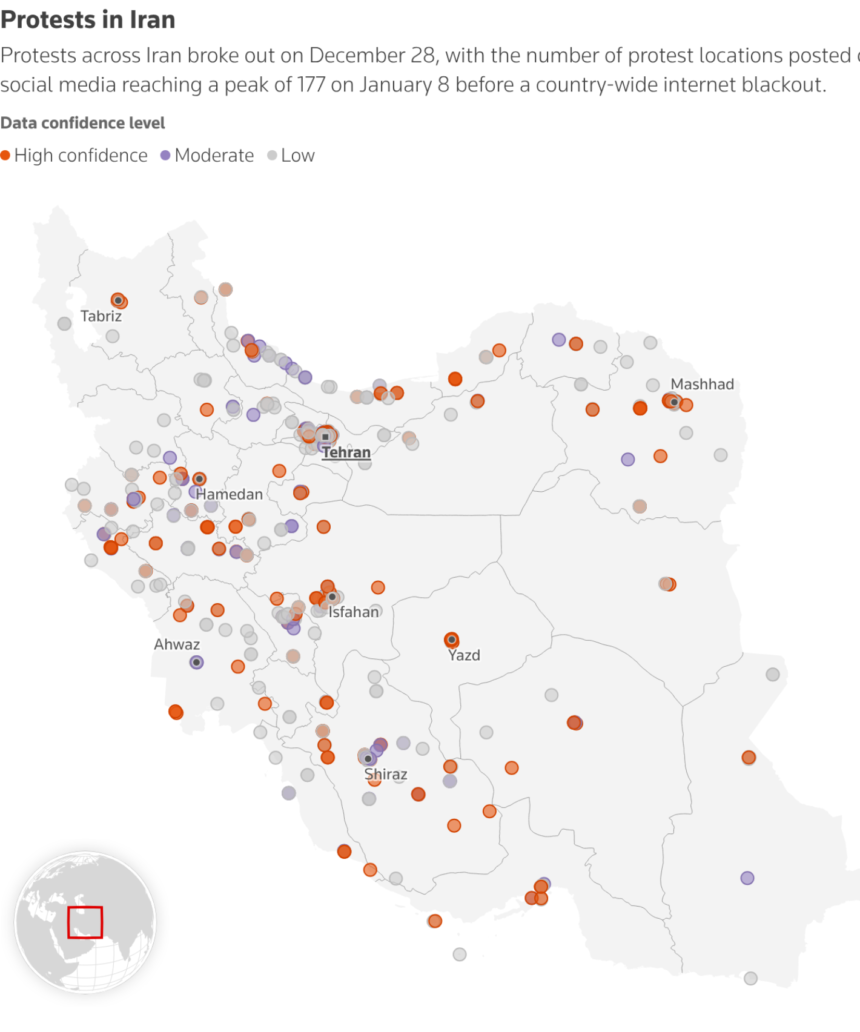
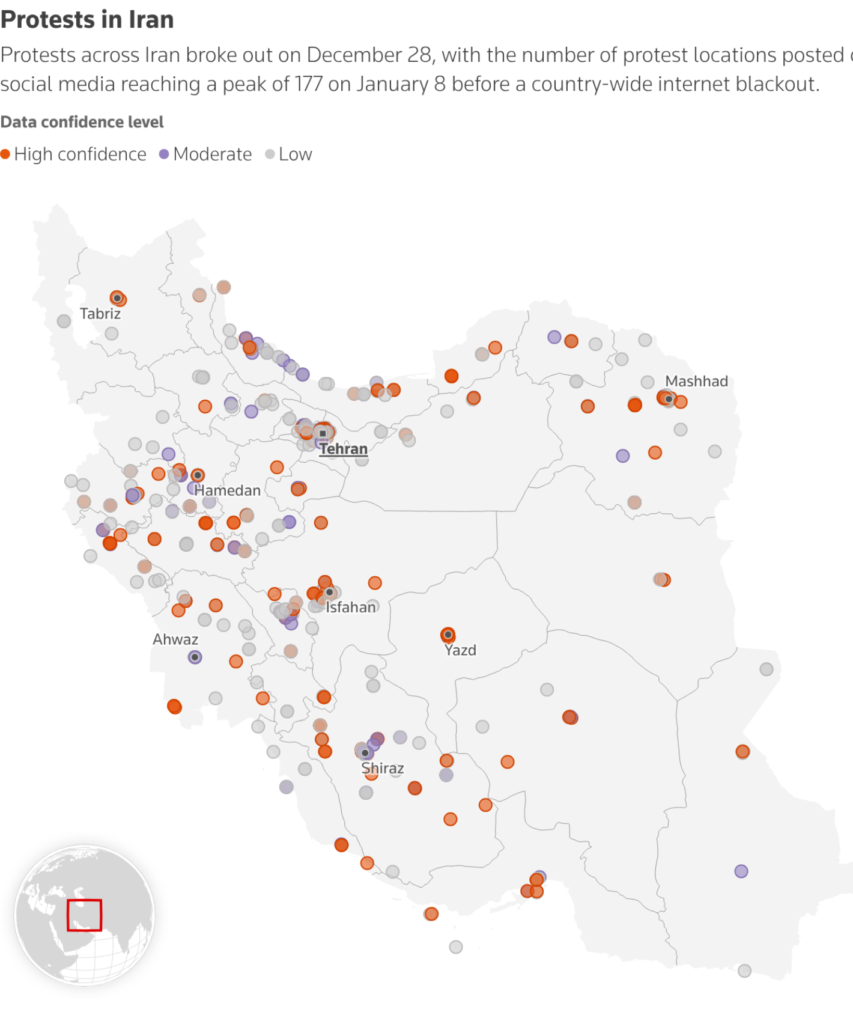
Understanding the Crisis: A Map View of Iran’s Protests
To understand the scale of the unrest, imagine a map of Iran:
Tehran, the capital, has seen large nighttime marches and loud chants against the government
Isfahan and Shiraz, key central cities, have witnessed repeated clashes
Mashhad and Tabriz in the northeast and northwest have also reported protests
Oil-rich southern regions have seen unrest tied to economic hardship
Border areas, including parts of Kurdish and Baluchi regions, have experienced heavy security deployments
This shows the protests are not limited to one region — they stretch from east to west and north to south, signaling a nationwide challenge.

Military Action Considered, But Risks Are High
Reports in U.S. media say options under discussion include military strikes, cyber operations, tougher sanctions, and online support for protesters.
However, striking Iranian military sites carries major risks. Many bases are located near cities, raising fears of civilian casualties. U.S. officials are said to be cautious, worried that direct attacks could weaken the protest movement instead of helping it.
Iran’s parliament speaker warned Washington against “miscalculation,” saying U.S. bases and Israeli targets would be hit if Iran is attacked.
Iran Says Situation ‘Under Control’
Iranian leaders insist the country is stable. State television showed pro-government rallies and funerals for security forces killed in recent violence.
Araqchi said the situation is “under total control” and accused the U.S. and Israel of stirring unrest to justify foreign intervention.
Authorities have called nationwide rallies to condemn what they describe as foreign-backed “terrorist actions.”
Internet Blackout and Starlink Talk
The flow of information from Iran has slowed sharply due to internet shutdowns. Trump said he may speak with Elon Musk about using Starlink satellite internet to restore access.
Iranian officials said internet services would gradually return under security supervision.
What Comes Next
Iran is still recovering from last year’s conflict with Israel, which weakened its military leadership and regional allies. With protests ongoing and outside pressure growing, Tehran faces a difficult path ahead.
While talks with the U.S. remain possible, the mix of unrest, threats, and diplomacy has created a tense and unpredictable moment.
Many experts believe the protests may not immediately bring down the system — but they could leave Iran’s leadership weaker and more isolated than before.