

Washington / Tehran — Former U.S. President Donald Trump has revealed that Iran has quietly reached out to Washington to explore negotiations over its nuclear program, even as the United States weighs strong measures against Tehran over a rapidly escalating protest crackdown.
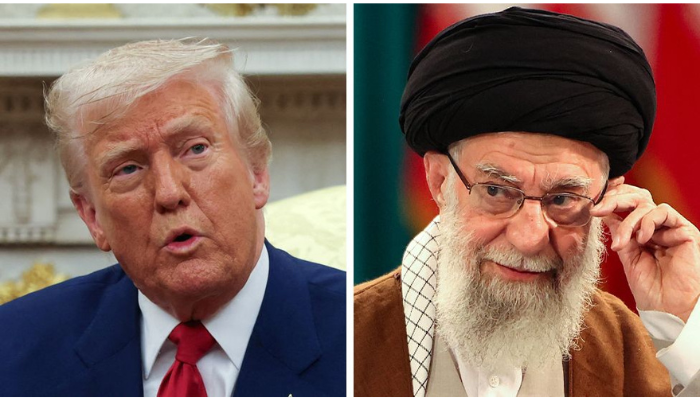
Speaking to reporters aboard Air Force One on Sunday, Trump said Iran contacted U.S. officials a day earlier with a proposal to discuss a potential nuclear deal. While he confirmed that a meeting is being arranged, Trump made it clear that diplomacy may not prevent immediate action if the situation inside Iran worsens.
“We may meet with them. A meeting is being set up,” Trump said. “But we may have to act because of what’s happening — possibly before the meeting.”
His remarks come at a moment of extraordinary tension, as mass protests spread across Iran and reports of civilian deaths continue to mount.
Why Trump’s Statement Matters
Trump’s comments mark a significant shift in tone at a time when Iran is facing one of its most serious internal crises in years. The combination of potential nuclear talks and the threat of U.S. military action highlights a high-stakes balancing act: pressuring the Iranian regime while avoiding steps that could derail the protest movement.
The former president has previously warned that any large-scale killing of protesters would cross a “red line.” On Sunday, he suggested that line may be approaching.
“There seems to be some people killed that are not supposed to be killed,” Trump said, criticizing Iran’s leadership for ruling “through violence.”
Death Toll Rises as Protests Spread
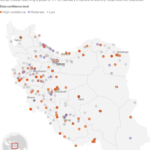
According to the U.S.-based Human Rights Activists News Agency (HRANA), at least 544 people have been killed and more than 10,000 arrested during protests that have erupted in 585 locations across Iran in just two weeks.
Israeli defense officials have cited intelligence assessments suggesting the death toll could be far higher — possibly exceeding 1,000 protesters.
Trump said he is receiving hourly briefings on the unrest, noting that some deaths were caused by shootings while others occurred during chaotic stampedes as security forces attempted to disperse crowds.
U.S. Considers “Very Strong Options”
Trump confirmed that a high-level meeting with his national security team is scheduled for Tuesday to review possible responses.
“We are looking at it very seriously,” he said. “The military is looking at it. We are looking at very strong options. We will make a determination.”
However, administration officials familiar with internal discussions say that large-scale military strikes are not the preferred option at this stage. Many believe direct attacks could backfire by allowing Tehran to portray the protests as a foreign-backed campaign.
Non-Military Pressure Takes Center Stage
According to U.S. officials, most proposals currently under review focus on non-kinetic measures designed to weaken the Iranian regime without overshadowing domestic unrest.
These options reportedly include:
Deterrence moves, such as deploying a U.S. aircraft carrier strike group to the region
Cyber operations targeting Iranian government systems
Information campaigns aimed at countering state propaganda
Economic and diplomatic pressure to isolate senior regime figures
Military action remains on the table, but officials emphasize it would be a last resort.
Iran Issues Threats, Trump Responds
Iranian officials have warned that any U.S. military strike would trigger retaliation against American bases across the Middle East.
Trump dismissed the threats, responding with one of his strongest warnings yet.
“If they did that, we will hit them at a level they were never hit before,” he said. “I have options that are so strong.”
The exchange underscores the fragile situation, where miscalculation on either side could rapidly escalate into a broader regional conflict.
Starlink and the Internet Blackout
One of the most immediate concerns for U.S. officials is Iran’s near-total control over internet access, which has been repeatedly restricted to disrupt protest coordination.
Trump said he is considering contacting Elon Musk to explore whether Starlink satellite internet could be used to restore connectivity inside Iran.
Such a move would allow protesters to communicate with the outside world and share evidence of abuses — a step that could significantly alter the information battlefield without deploying troops.
Diplomacy and Pressure Move in Parallel
Iran’s outreach on nuclear talks suggests the regime may be seeking relief from mounting international pressure as unrest grows at home. Yet Trump’s comments indicate that Washington is unwilling to separate nuclear negotiations from Tehran’s internal conduct.
The message is clear: diplomacy remains possible, but it will not shield Iran from consequences if violence against civilians continues.
As protests intensify and global scrutiny increases, the coming days could prove decisive — not only for U.S.–Iran relations, but for the future direction of Iran itself.
What to Watch Next
Outcome of Tuesday’s U.S. national security meeting
Whether nuclear talks move forward or stall
Any visible U.S. military deployments in the region
Iran’s response to growing international pressure
Potential efforts to restore internet access inside Iran
The situation remains fluid, with diplomacy, deterrence, and domestic upheaval colliding in real time.