

If you’re still using your personal Social Security Number to buy business supplies, you’re playing a dangerous game. It’s time to stop. Business credit is the tool you need to separate your personal life from your business. Period.
Look, I’ve seen way too many people waste time and money trying to juggle personal and business finances. It’s like putting a handbrake on your own success. You’re going to need a real business credit profile if you want to scale, get better loans, and stop paying ridiculous interest rates.
But here’s the thing: banks won’t just hand it over. You’ve got to prove you’re worth their time. You need the right strategy, and that starts with tradelines. Let’s break it down.
Step 0: Business Legitimacy Checklist – Get Your Stuff Together
Before you even think about tradelines, you need to make sure your business looks legit to lenders. Banks and vendors will ignore you if your business isn’t in the game. This is the first step in building a credible business credit profile. Here’s what you need:
Business Address:
No PO Boxes. Lenders want to see a physical address. No virtual offices, unless they’re compliant.Business Phone:
You can’t just use your personal cell number. Get a business phone line and make sure it’s listed on ListYourself.net. It’s an easy way to make your business look established.Professional Email:
If you’re still using Gmail or Yahoo for your business email, stop. It screams unprofessional. Use a domain-based email that reflects your business name.NAICS Code:
Make sure you have the correct NAICS code for your industry. This helps vendors understand what you do. Don’t skip it.
Business Bank Account:
If you haven’t done this yet, get a separate business bank account. You want to keep your personal and business expenses separate. It also helps when it comes time to apply for business credit.
Once you’ve crossed off these items, your business is officially legit in the eyes of lenders and vendors. Let’s move on to the next step: building your credit.
Tier-Based Expansion: The Vendor Game Plan
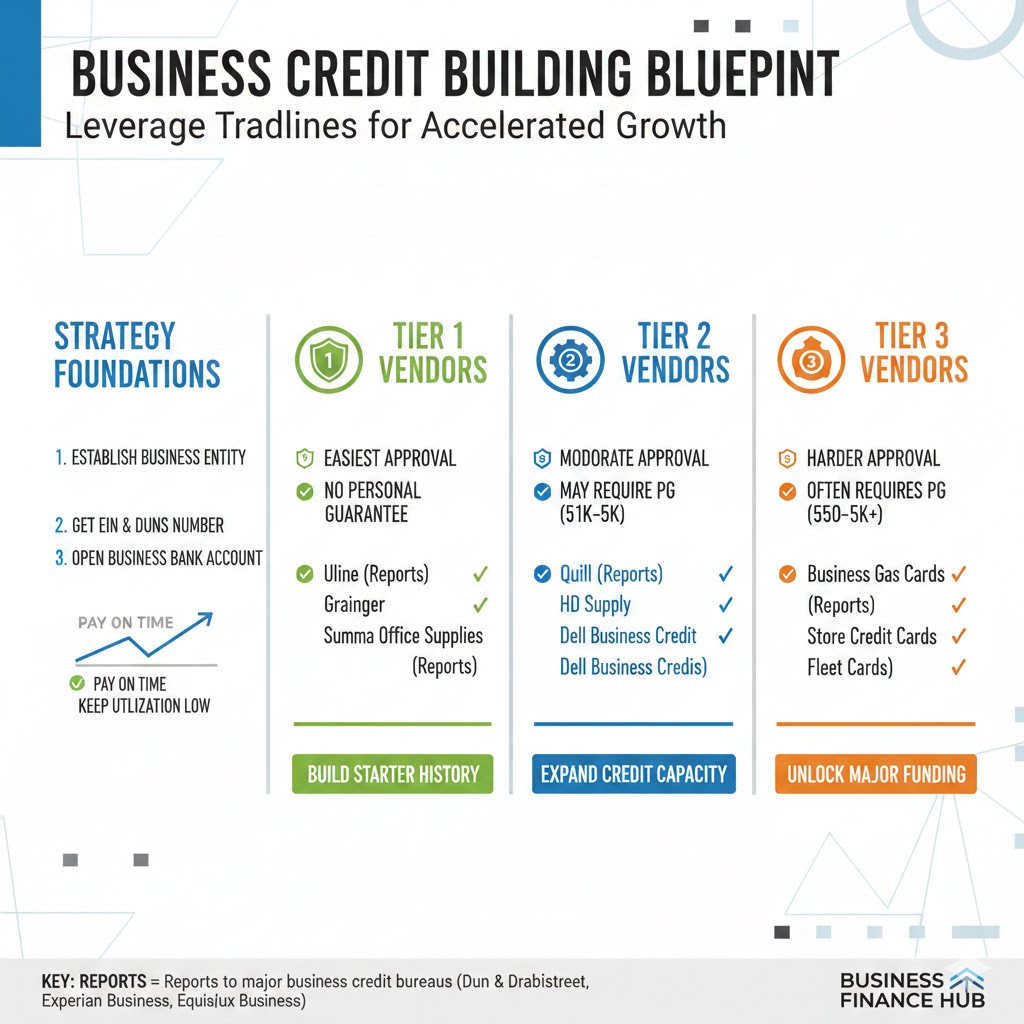
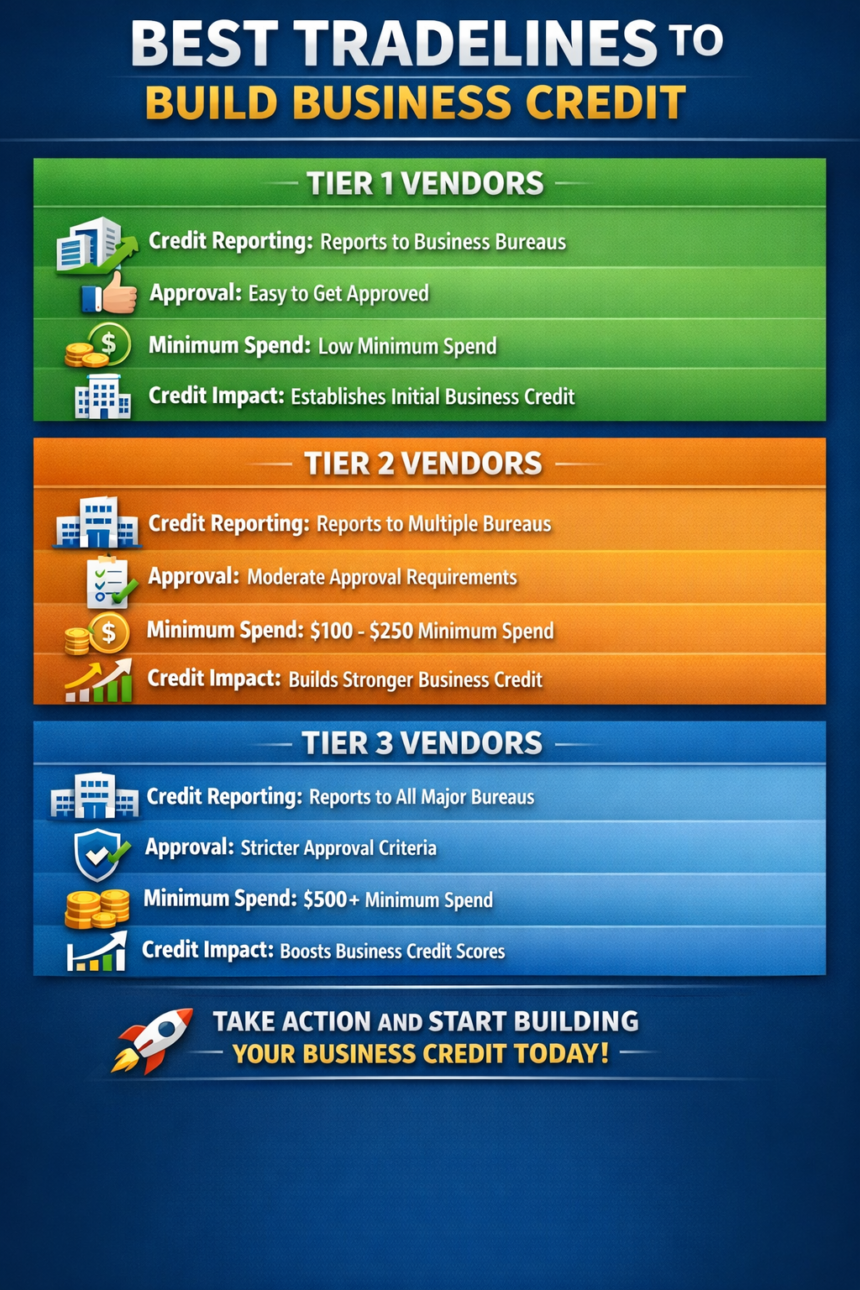
Building business credit isn’t a sprint; it’s a marathon. You need to go through three distinct tiers. Each tier represents a step up in your business credit journey. Let’s dive in.
Tier 1: Starter Vendors – The Easy Wins
These are the vendors that will help you get your foot in the door. They are crucial to building the foundation of your credit profile. These vendors are often low-risk and will help you establish the minimum credit history you need to move to the next step.
Uline
Reports To: D&B, Experian
Approval Ease: Easy
Min Spend: $50
Uline sells office supplies and reports your payments to D&B and Experian, which means you’re building that credit history right off the bat.
Quill
Reports To: D&B, Experian
Approval Ease: Easy
Min Spend: $50
Quill’s another great choice to get started. Buy basic office supplies, and they’ll report your payments to the credit bureaus.
Grainger
Reports To: D&B, Experian
Approval Ease: Easy
Min Spend: $100
Grainger is a go-to for business supplies, especially for industrial and construction needs. It’s also one of the more established vendors that will help you build strong credit.
Tier 2: Store Credit – Moving Up
Once you have 3-5 tradelines from Tier 1 vendors, it’s time to move up to Tier 2. These vendors offer more credit, but they also want to see a bit more of a track record before granting you credit. Tier 2 is where the game gets serious
Amazon Business
Reports To: D&B, Experian
Approval Ease: Moderate
Min Spend: $100
Amazon’s business account is essential for business owners who need to purchase supplies regularly. You can’t go wrong here—it reports to both D&B and Experian, so it counts toward building your credit profile.
Staples
Reports To: D&B, Experian
Approval Ease: Moderate
Min Spend: $50
Staples is an excellent choice for businesses needing office supplies. It’s a well-known vendor, and they report to major credit bureaus, giving you added credibility.
Home Depot
Reports To: D&B, Experian
Approval Ease: Moderate
Min Spend: $100
Home Depot is critical for businesses that require building materials, tools, and more. The reports to D&B and Experian will be huge for growing your credit.
Tier 3: High-Limit & Fleet Cards – Ready to Scale
Once your credit profile is looking solid, you can start applying for high-limit cards and larger lines of credit. These are heavy hitters like gas cards and high-limit vendor credit lines. This is where you level up.
WEX Fleet Card
Reports To: D&B, Experian
Approval Ease: Hard
Min Spend: Varies
If you have a fleet of vehicles, the WEX fleet card will help you build solid business credit.
Fuelman
Reports To: D&B, Experian
Approval Ease: Hard
Min Spend: Varies
This card is for business owners who require fuel for their vehicles. It reports to major bureaus, helping you continue building that credit profile.
Nav Prime
Reports To: D&B, Experian
Approval Ease: Moderate
Min Spend: Varies
The Nav Prime card is a game-changer. It’s a card that reports guaranteed, meaning no more guessing when it comes to building credit.
Understanding the Math: What the Bureaus Are Actually Looking At
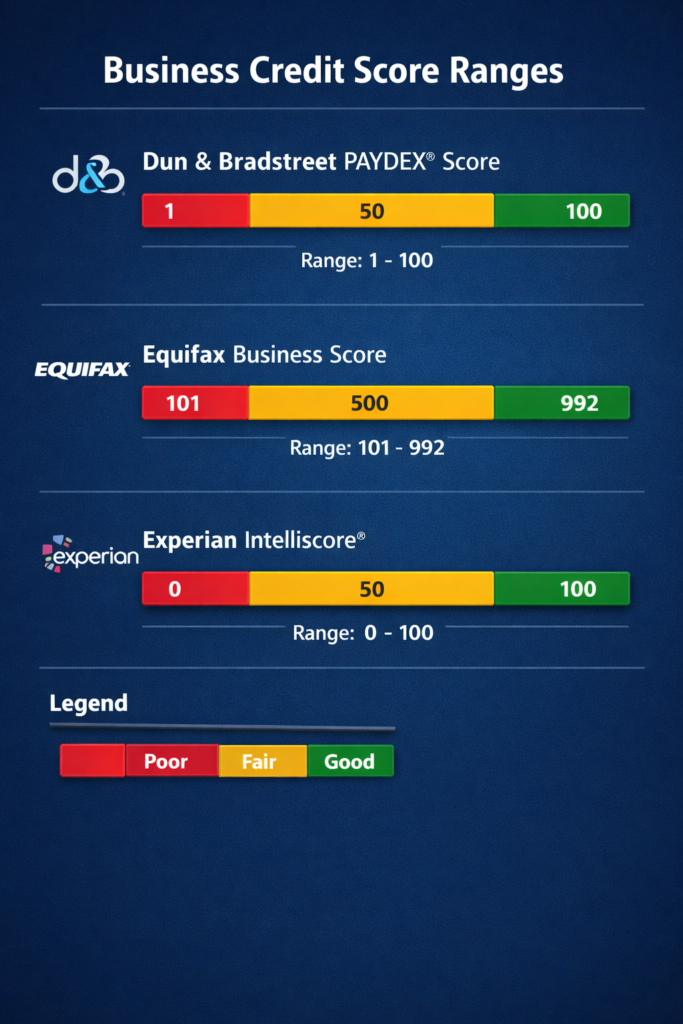
Now that you’ve got a bunch of tradelines, it’s time to break down what the bureaus are looking at. It’s not just about having lines of credit; it’s about how well you’re managing them.
Dun & Bradstreet (D&B)
PAYDEX (0-100 scale):
80 and above is solid. Anything below that, and lenders will start getting hesitant.
Failure Score (0-1000 scale):
This predicts how likely your business is to fail. You want this score to be as low as possible.
Delinquency Predictor Score (DPS) (0-100 scale):
You want this number high. It predicts how likely you are to miss payments. If it’s too low, you’re going to get flagged.
Equifax Business
Score Range: 101-992
Anything below 600 is a bad sign. You’ll want to aim for 750+ to get favorable terms.
Experian Business
Score Range: 0-100
80+ is great. 60-79? You’re okay, but you need to keep working on it.
Why Does This Matter?
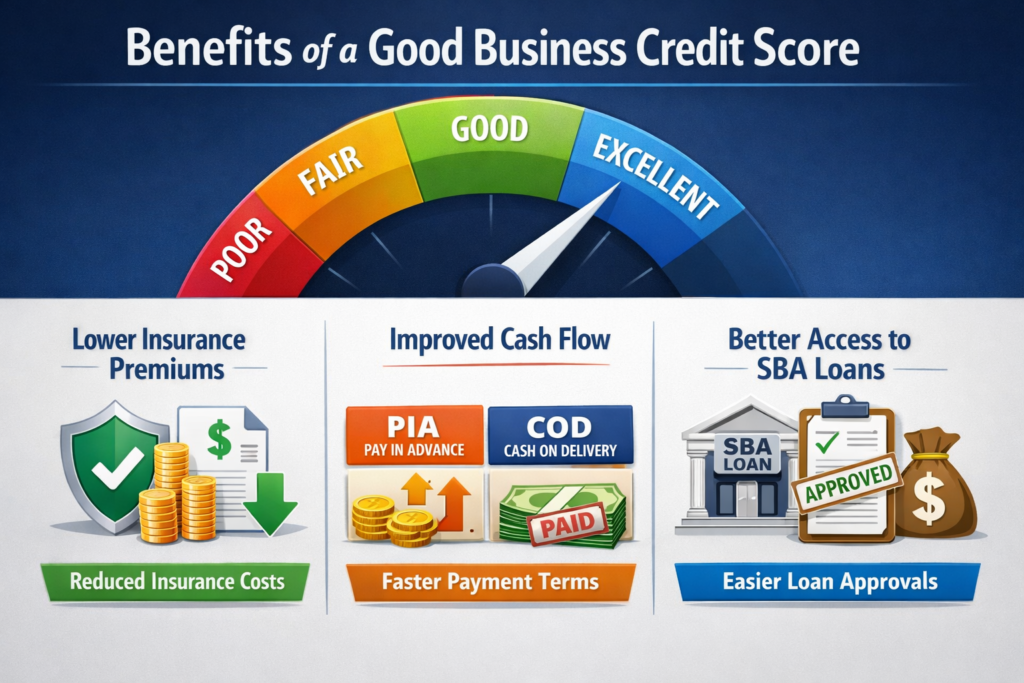
Improving your business credit score isn’t just for getting loans. Here’s why it matters more than you think:
Lower Insurance Premiums: Good business credit can lower your insurance costs. It’s like getting money back just for having good credit. Free money.
Cash Flow: Better terms with vendors mean you don’t have to pay upfront. That means more cash in your pocket, and more time to pay. It helps your cash conversion cycle (time between paying a vendor and getting paid).
SBA Loans & Trade Credit: SBA loans? You’ll get better rates with better business credit. Same goes for interest-free trade credit. Banks will trust you more, and so will vendors.
The No-PG Strategy: Get Credit Without a Personal Guarantee
The goal is to separate your personal and business credit. After a while, you’ll be able to build enough credit to get business credit without a personal guarantee. That’s the holy grail. But it takes time and patience.
Conclusion: Take Action NOW
Stop waiting. Pick one vendor today, get started, and begin building your business credit. It’s not going to happen by itself. If you don’t know where to start, pick a Tier 1 vendor, buy what you need, and pay it off on time.
FAQ: Best Tradelines to Build Business Credit
Tradelines are accounts listed on your credit report that show your borrowing history. For businesses, tradelines help establish creditworthiness. Using tradelines, especially vendor accounts that report to credit bureaus, is a key way to build and improve business credit, which can lead to better financing options and lower interest rates.
You can get tradelines for your business by applying for vendor credit lines, such as Net 30 accounts with suppliers like Uline or Quill. Once you make timely payments, these vendors will report your payment history to the business credit bureaus, helping to build your business credit profile.
Typically, it takes 3-6 months of consistent payments for vendors to report your activity to the credit bureaus. However, it might take longer to establish a solid credit history and reach scores that qualify for larger credit lines or loans.
While some companies sell “seasoned tradelines,” buying them can be risky. These tradelines are often not linked to your actual business activities, and using them can lead to legal and financial issues. It’s best to build business credit organically through approved vendors and by establishing a real, positive credit history.
Tier 1: These are starter vendors like Uline and Quill that are easy to get and report to major credit bureaus, helping you build a credit profile.
Tier 2: Includes retailers like Amazon and Home Depot, which require a few Tier 1 tradelines before approval.
Tier 3: These include high-limit vendors like WEX and Fuelman, offering more substantial credit but often with stricter approval requirements.
To quickly improve your business credit, focus on paying off existing tradelines on time. Make sure to open Net 30 accounts with Tier 1 vendors and use them regularly. Additionally, monitor your credit reports for any inaccuracies and address them promptly.
While some vendors may offer free credit lines, most businesses will need to apply for Net 30 or similar accounts to get credit that reports to the bureaus. Many free tradeline options are limited and may not significantly impact your credit score without additional credit-building efforts.
Disclaimer:
The information provided in this article is for educational purposes only and should not be considered as financial advice. Always consult with a financial advisor or credit counselor before making any significant decisions regarding debt repayment or financial strategies. The strategies discussed may not be suitable for everyone and results may vary depending on individual circumstances.