


Opening a bank account in the United States is one of those steps that sounds simple, but often isn’t. For many people—new arrivals, immigrants, international students, or even first-time account holders—the U.S. banking system can feel confusing at the start. Different fees, unfamiliar terms, and paperwork can easily turn a basic task into a stressful one if you’re not prepared.
at USAHarmony, we hear these concerns all the time. People ask why banks charge unexpected fees, which documents are actually required, and how to choose an account without making costly mistakes. This guide is built around those real questions and everyday situations. Instead of banking jargon, you’ll find clear, practical explanations in straightforward American English—so you can open a bank account with confidence, not confusion.
Why Having a Bank Account Is Essential in the USA
In the United States, a bank account is more than a convenience—it is a necessity. Most employers, landlords, service providers, and even government agencies expect you to have one.
Without a bank account, you may struggle to:
-
Receive wages or benefits
-
Pay rent and utility bills
-
Use debit or credit cards
-
Transfer money electronically
-
Build financial history
A U.S. bank account acts as the foundation for your entire financial life. It helps establish stability, organization, and credibility within theAmerican financial system.
Understanding the U.S. Banking System
The U.S. banking system includes several types of financial institutions:
-
Regional and local banks that operate in specific states
-
Credit unions, which are member-owned and often more flexible
-
Online-only banks with no physical branches
Each option has advantages depending on your needs, location, and financial goals.
Types of Bank Accounts in the USA
Before opening an account, it is important to choose the right type.
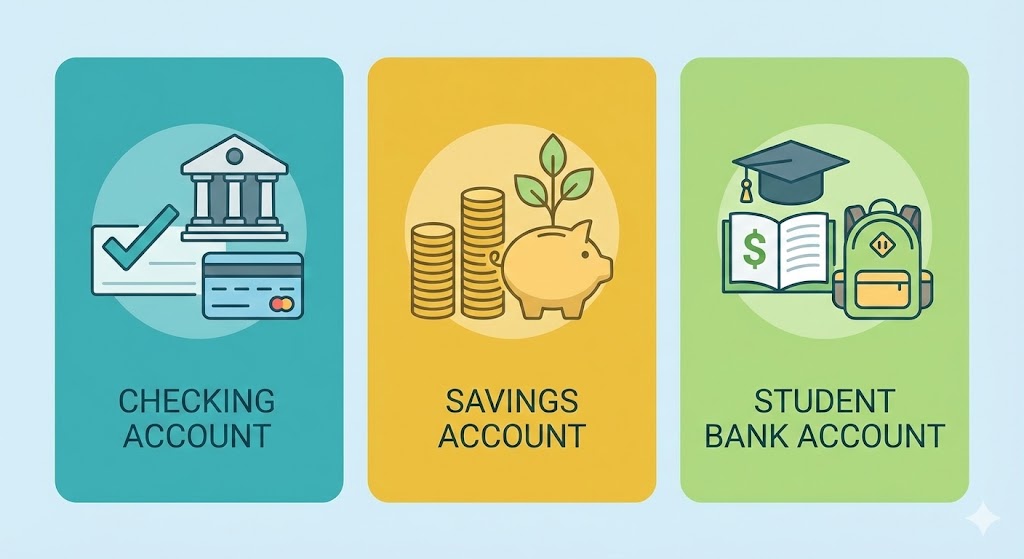
Checking Accounts
A checking account is designed for everyday financial activity.
Common features include:
-
Debit card for purchases
-
ATM withdrawals
-
Bill payments and transfers
This is the account most people use for daily expenses, salary deposits, and regular payments.
Savings Accounts
Savings accounts are meant for storing money safely and earning interest.
Key characteristics:
Earns interest (usually modest)
Limited number of withdrawals
Encourages saving habits
Most Americans keep both a checking and a savings account.
Student Bank Accounts
These accounts are tailored for college and university students.
Benefits may include:
Lower or no monthly fees
Minimal balance requirements
Easy account access through apps
Joint Accounts
Joint accounts are shared between two or more people, often spouses or family members. All account holders can access the funds.
Documents Required to Open a Bank Account in the USA
While requirements vary by institution, most banks ask for the following:
Commonly Required Documents
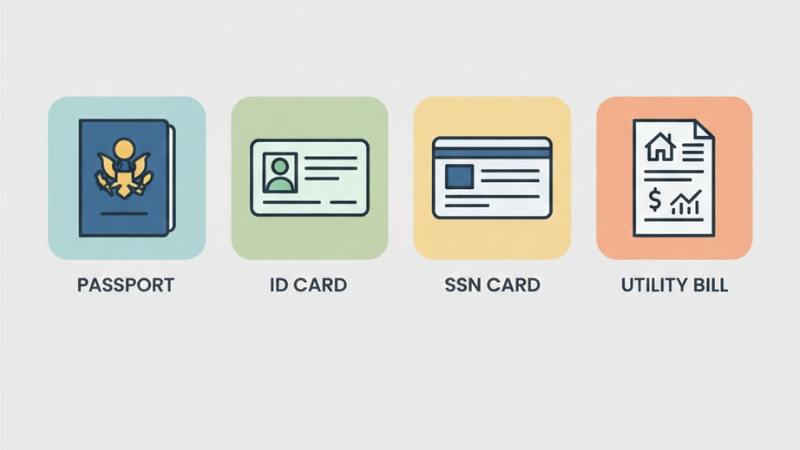
Government-issued photo ID (passport, driver’s license, or state ID)
Social Security Number (SSN) or Individual Taxpayer Identification Number (ITIN)
Proof of U.S. address (lease agreement, utility bill, official letter)
Can You Open a Bank Account Without an SSN?
Yes, in many cases.
Some banks allow account opening with:
Passport and visa documents
Proof of address
Many credit unions and community banks are more flexible for beginners compared to large national banks. Policies differ, so asking directly is important.
To open an account, most banks will ask for a Social Security Number (SSN). If you are a non-resident and don’t have an SSN, you can apply for an Individual Taxpayer Identification Number (ITIN) through the official IRS website (https://www.irs.gov/individuals/individual-taxpayer-identification-number).”
Step-by-Step: How to Open a Bank Account in the USA
Step 1: Choose the Right Bank
Consider:
Branch locations near you
ATM availability
Online banking quality
Customer support
Fees and minimum balances
There is no “best” bank for everyone—only the best fit for your situation.
Step 2: Compare Fees Carefully
U.S. banks often charge:
Overdraft fees
Minimum balance penalties
Many fees can be avoided by maintaining a balance or setting up direct deposit. Always read the fee schedule.
Step 3: Apply Online or Visit a Branch
Online applications are fast and convenient. Branch visits are helpful if you:
Do not have an SSN
Have questions
Prefer in-person assistance
Bring all required documents.
Step 4: Make the Initial Deposit
Some banks require an opening deposit (often $25–$100). Others allow accounts with no initial deposit.
Step 5: Activate Online Banking and Debit Card
Once approved:
Enable alerts
Activate your debit card
Create strong passwords
Online Banks vs Traditional Banks
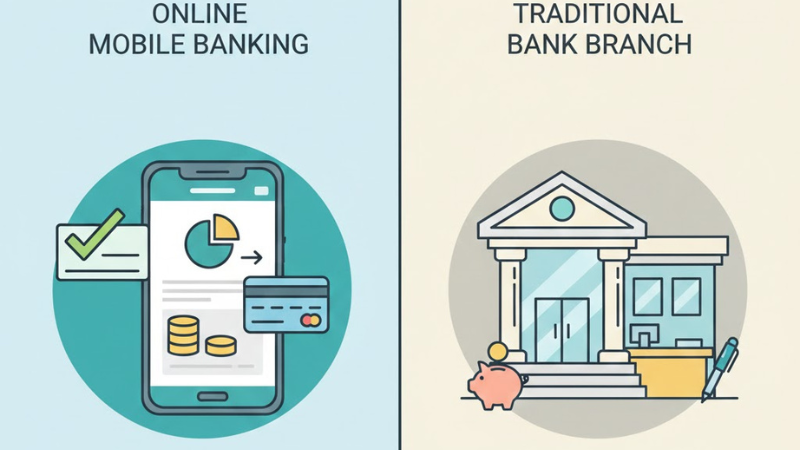
Online Banks
Advantages
-
Lower or no monthly fees
-
Higher savings interest rates
-
Strong mobile apps
Disadvantages
-
No physical branches
-
Cash deposits can be inconvenient
Traditional Banks
Advantages
-
Face-to-face support
-
Easier cash handling
-
Widespread acceptance
Disadvantages
-
Higher fees
-
Lower interest rates
Your choice depends on lifestyle and comfort level.
Common Banking Fees You Should Know
Understanding fees prevents surprises.
Common fees include:
-
Monthly maintenance fee
-
Overdraft fee
-
ATM withdrawal fee
-
Foreign transaction fee
-
Wire transfer fee
Always ask how to avoid fees legally and safely.
Common Mistakes Beginners Make
Many first-time account holders lose money due to avoidable errors:
-
Not tracking balances
-
Overdrafting accounts
-
Ignoring fee notices
-
Using out-of-network ATMs
-
Closing accounts too quickly
Avoiding these mistakes saves money and protects your banking history.
How a Bank Account Supports Your Financial Future
A well-managed bank account:
-
Builds transaction history
-
Makes credit approval easier
-
Helps with budgeting and saving
-
Establishes trust with financial institutions
Maintaining a healthy bank account also supports long-term goals such as building a strong credit profile in the United States, which affects loans, housing, and even job opportunities.
Safety and Security of U.S. Banks
Most U.S. banks are federally insured up to legal limits. This means your money is protected even if the bank fails.
You should still:
Use strong passwords
Enable two-factor authentication
Monitor account activity
Report suspicious transactions immediately
- Your deposits in most U.S. banks are protected by the federal government. You can verify if your bank is insured by visiting the official FDIC (Federal Deposit Insurance Corporation) website.”
FAQs: Opening a Bank Account in the USA
Yes, non-residents can open a U.S. bank account. Many banks accept an ITIN or valid passport, even if you don’t have an SSN.
The minimum balance depends on the bank. Some digital banks and credit unions offer zero-balance accounts, while traditional banks usually require an initial deposit of $25–$100.
Not necessarily. While traditional banks may require an in-person visit, many neo-banks and global platforms like Wise or Revolut let you open a U.S.-based account online from your home country.
Yes. Employment proof is usually not required if identification is valid.
Same day in most branches; minutes online.
Usually no, but policies vary by bank.
Yes, many Americans do for budgeting and savings.
Final Thoughts
Opening a bank account in the USA may seem complicated at first, but it becomes simple once you understand the process. Choose a bank that fits your needs, watch out for fees, and manage your account responsibly. A strong banking foundation makes every other financial step easier and more secure.
Disclaimer: The information provided in this article is for educational and informational purposes only. Banking regulations in the USA can change frequently. We are not financial advisors, and we recommend visiting the official website of the respective bank or consulting a professional before making any financial decisions.
Disclaimer:
The information provided in this article is for educational purposes only and should not be considered as financial advice. Always consult with a financial advisor or credit counselor before making any significant decisions regarding debt repayment or financial strategies. The strategies discussed may not be suitable for everyone and results may vary depending on individual circumstances.