


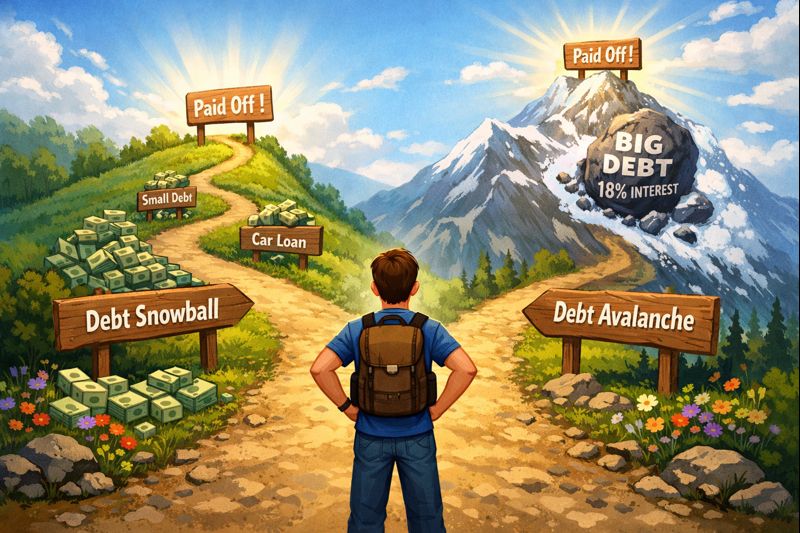
Staring at a credit card statement when interest rates are sitting around 20–24%—and sometimes creeping past 25%—can feel pointless. You make a payment, feel a little relief, and then the next statement shows interest has already eaten most of it. It’s like bailing water out of a sinking boat with a cracked bucket. No surprise there: total U.S. credit card debt has crossed $1.2 trillion and keeps climbing in 2026. This system isn’t built to help you escape—it’s built to keep you paying.
Here’s the part most advice skips over: getting out of credit card debt isn’t just about the math. It’s about how your brain works. If seeing quick progress keeps you motivated, the Debt Snowball can help you stay in the fight. If you’re disciplined and hate handing extra money to banks, the Debt Avalanche usually costs you less in the long run.
In this 2026 guide, we’ll break down both approaches using real U.S. numbers, walk through clear examples, and help you choose a strategy that actually fits your habits and your life—not just what looks best on paper.
Why the Best Strategy for Paying Off Credit Card Debt is Not One-Size-Fits-All
When it comes to paying off credit card debt, it’s easy to get lost in the sea of advice. Whether it’s the Debt Snowball or Debt Avalanche method, you’ve probably heard about both strategies and wondered which one is truly the best for you. The reality is, the best strategy for paying off credit card debt is deeply personal. The right choice depends on your unique financial habits, goals, and even your psychology. For some, motivation from quick wins is crucial, while for others, saving money on interest is the main focus.
Let’s break down the Snowball and Avalanche methods, compare their benefits and challenges, and look at how they work in real life.
Debt Snowball vs. Debt Avalanche: A Detailed Comparison
| Feature | Debt Snowball | Debt Avalanche |
|---|---|---|
| Focus | Pay off the smallest balance first | Pay off the highest-interest debt first |
| Interest Savings | Saves less on interest in the long run | Maximizes interest savings, saves more over time |
| Psychological Wins | Quick wins with small debts motivate further action | Slower progress, but more efficient in the long term |
| Time to Pay Off Debt | Takes longer due to the order of payments | Typically takes less time to pay off debt |
| Best for | People who need motivation and quick wins | Those who are disciplined and focused on long-term savings |
| Emotional Impact | Immediate satisfaction from clearing debts quickly | Can feel slow, which may lead to frustration |
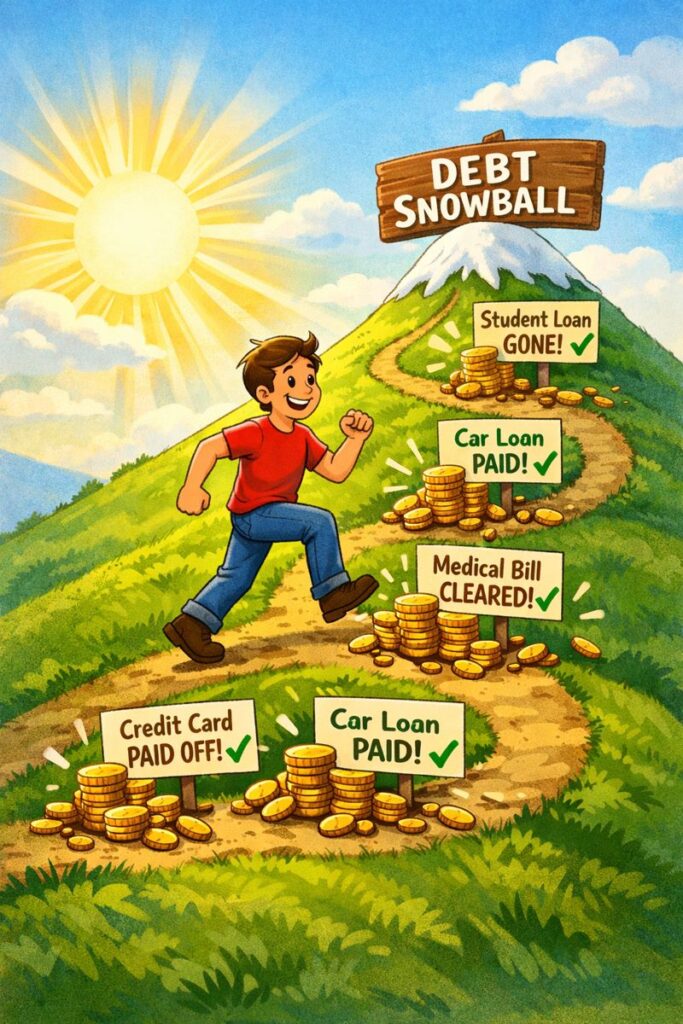
Debt Snowball Method: The Quick Fix for Motivation
The Debt Snowball method is all about small wins. In this approach, you focus on paying off your smallest debt first, regardless of interest rates. Once that debt is paid off, you move on to the next smallest, and so on, snowballing your payments as you go. The idea is that by clearing out smaller debts, you’ll gain motivation to tackle larger ones.
Pros of the Snowball Method:
Psychological Wins: The main appeal of the Debt Snowball method is that it offers quick wins. As soon as you pay off that smallest balance, you’ll feel a sense of accomplishment that drives you to keep going.
Boosts Confidence: Clearing small balances quickly helps build momentum, especially if you’re struggling with motivation. Each “win” builds your confidence to pay off bigger debts.
Cons of the Snowball Method:
Higher Interest Costs: While the Snowball method can be motivating, it’s less efficient financially. By paying off smaller debts first, you’re likely accumulating more interest on the larger, high-interest debts. Over time, this will cost you more.
Slower Progress: If most of your debts have high-interest rates, you may find that the Snowball method stretches out the time it takes to become debt-free. This can feel discouraging if you’re not seeing significant reductions in your overall debt.
Debt Avalanche Method: The Financially Savvy Approach
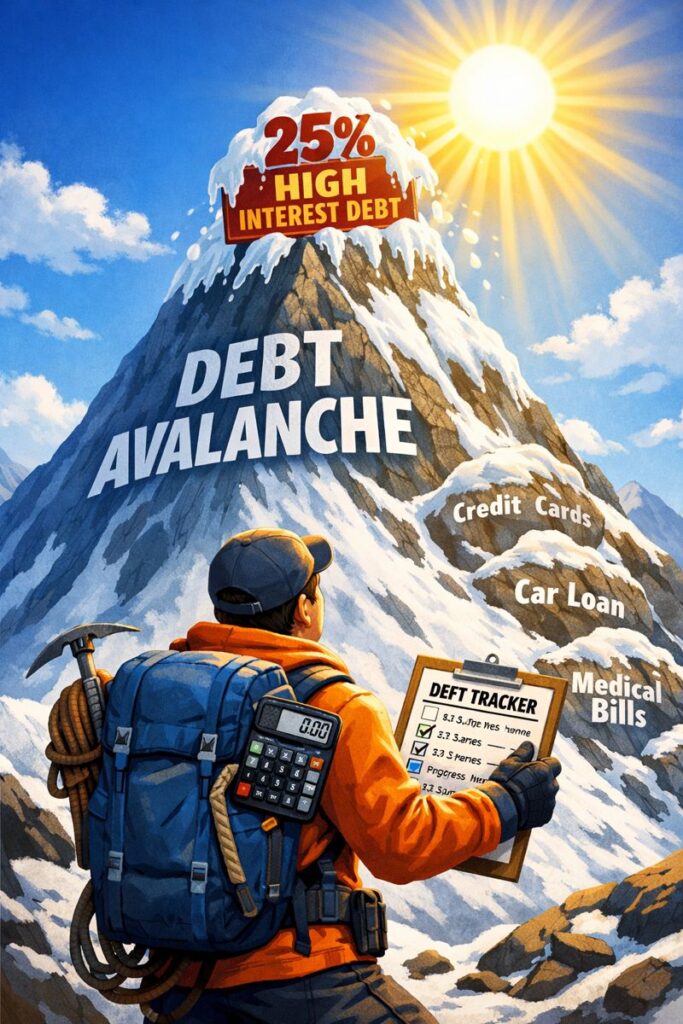
On the other hand, the Debt Avalanche method targets the highest-interest debt first, regardless of the balance size. This method is often considered more efficient because it reduces the amount of interest you’ll pay over time.
Pros of the Avalanche Method:
Interest Savings: Because you’re focusing on paying off the highest-interest debt first, you’ll save the most money in the long run. By knocking out the expensive debt first, you’ll stop accumulating as much interest, which means your payments go further.
Faster Debt Repayment: In the long run, you’ll be able to pay off your debt faster because you’re addressing the high-interest debt that compounds the most. This reduces the total amount you’ll pay over time.
Cons of the Avalanche Method:
Slower Progress: Unlike the Snowball method, you won’t see quick wins. If your largest debt is a big one, it may take a while before you pay it off. This can be discouraging for people who need a bit of motivation along the way.
Requires Discipline: The Avalanche method is best for those who can stick to a long-term plan. If you’re the type of person who needs immediate satisfaction, the slower pace may become frustrating.
Which Method Should You Choose?
The best strategy isn’t just about the math—it’s whichever method (Snowball or Avalanche) actually keeps you motivated enough to stop swiping and stay consistent.
If you need quick wins to stay motivated, the Snowball method might be the right choice for you. It helps build momentum, especially if you struggle to see progress. However, if you’re more focused on saving money on interest and are disciplined enough to stick with a slower but more financially efficient strategy, the Avalanche method is the way to go.
For example, Jane was dealing with $5,000 in credit card debt—three cards, $1,000 at 18%, $2,500 at 22%, and $1,500 at 25%. She chose the Snowball method because she wanted quick wins. It took her about 14 months to pay off her debt, but she ended up paying more in interest because she didn’t focus on the high-interest debt first.
Mike, on the other hand, had a similar $8,000 in debt spread across three cards. He used the Avalanche method, focusing on paying off the card with 25% APR first. He managed to pay off his debt in 18 months, saving about $800 in interest compared to Jane’s method.
Real-World Example: The Impact of Your Method Choice
Let’s consider another example. Sophia had $12,000 in credit card debt spread across four cards. Using the Avalanche method, she focused on paying off the card with 24% APR first. She paid off $3,000 of the debt over the next year, saving roughly $500 in interest. Although her progress felt slow, she could see the benefit of putting her money toward high-interest debt.
Meanwhile, Mark had the same amount of debt, but used the Snowball method. He focused on paying off a smaller $2,000 balance with a 15% APR first. He felt motivated as he paid off the smaller debt within just 6 months, but ended up spending an extra $700 in interest on his larger debts.
Pick Your Method: Commit to One Small Change This Week
The bottom line is, there’s no one-size-fits-all solution. The best strategy for paying off credit card debt depends on your habits, your goals, and how you handle progress. Whether you choose the Snowball or Avalanche method, commit to one today. Make a decision, track your expenses, and start putting those extra dollars toward clearing your debt.
Pick your method, and take action. Focus on small, consistent steps, and you’ll see results. Pick one small change this week—whether it’s cutting back on a subscription or cooking at home instead of eating out. Every step counts, and soon you’ll be on the road to being debt-free.
Suggested FAQs for the Article
The best strategy depends on your personal financial situation and goals. The Debt Snowball method offers quick wins by paying off the smallest debt first, while the Debt Avalanche method focuses on paying off the highest-interest debt to save money in the long run.
The Snowball method focuses on paying off the smallest debt first. Once that’s cleared, you move on to the next smallest, gaining motivation from each “win.”
The Avalanche method saves the most money because it targets high-interest debt first, reducing the amount of interest you pay over time. It’s a more efficient method but may require more patience.
Disclaimer:
The information provided in this article is for educational purposes only and should not be considered as financial advice. Always consult with a financial advisor or credit counselor before making any significant decisions regarding debt repayment or financial strategies. The strategies discussed may not be suitable for everyone and results may vary depending on individual circumstances.