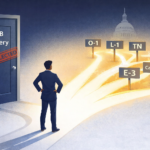



Quick Summary: Most “EIN-only” business credit cards you see advertised still do a soft pull or require a personal guarantee somewhere in the fine print. Genuinely no-SSN, no-personal-guarantee cards exist — but the requirements are specific. This guide breaks down exactly who qualifies, which options are real, and how to build toward them if you don’t qualify yet.
A note before we start: A significant portion of USAHarmony’s readership consists of H-1B holders, F-1 OPT graduates, and immigrant entrepreneurs who have navigated the US financial system without a credit history safety net. The questions this article answers came directly from that community — from readers who spent hours on the phone with card issuers only to be told “we need your SSN” after they’d already built a case for approval. That experience shaped how this guide is written.
The Problem Nobody Admits Upfront
You searched “business credit cards with EIN only” because you want one of two things: either you want to keep your personal credit completely separate from your business, or you don’t have strong US personal credit history to begin with.
Both are completely valid reasons.
The frustrating part? A lot of what ranks on Google for this keyword is written by the card companies themselves. Of course they make it sound easy.
Here’s what’s actually true: genuinely EIN-only cards — meaning no SSN required, no personal credit check, no personal guarantee — are rare. They exist, but they have real requirements that most beginner-level content glosses over.
According to the 2024 Federal Reserve Small Business Credit Survey, 43% of small business applicants were denied financing or received less than requested — with newer businesses and those without established credit histories facing the steepest rejection rates. That gap is exactly what EIN-only cards are designed to address.
[UPDATED — DIFFERENTIATION: Immigrant-Specific Angle]
What the Federal Reserve data doesn’t break out — and what Nav, Lendio, and NerdWallet don’t address — is how this rejection rate compounds for immigrant entrepreneurs. A foreign national on H-1B who has been in the US for two years may have a 700+ personal FICO score but a “thin file” — too few accounts, too short a history — that triggers automatic denials from traditional issuers. The EIN-only path isn’t just a preference for this group. In many cases, it’s the only realistic route to business credit that doesn’t circle back to a personal file that the system hasn’t had time to build yet.

What “EIN-Only” Actually Means in 2026
Your EIN — Employer Identification Number — is issued by the IRS. It’s essentially the Social Security Number for your business. But here’s what most people miss: having an EIN doesn’t automatically create a business credit profile. That’s a completely separate thing.
Business credit is tracked by three main bureaus: Dun & Bradstreet (D&B), Experian Business, and Equifax Business. These are entirely separate from the personal bureaus. Your personal FICO score has nothing to do with them.
An EIN-only business credit card means the approval decision is based on your business’s financial standing — its bank balance, revenue, or existing business credit history — not your personal credit score or SSN.
The key phrase you need to know: no personal guarantee. With a personal guarantee attached, it doesn’t matter what the card is called — if you default, it hits you personally. The card may say “business” on the front and still function like a personal liability on the back.
Who Actually Needs an EIN-Only Card?
Immigrants and visa holders. If you’re on an H-1B, F-1 OPT, or any non-immigrant status and have started a US business, you may not have enough personal credit history to qualify for standard business cards. Some corporate cards — Ramp specifically — accept a valid passport as the primary ID document instead of SSN, which removes the most common barrier this group faces.
[UPDATED — DIFFERENTIATION: H-1B Compliance Tension]
There’s a tension here that no mainstream financial site discusses: H-1B holders are sponsored for a specific job with a specific employer. Operating a business on the side — even a passive LLC — raises compliance questions that are entirely separate from the financial ones. The IRS will happily issue you an EIN. The card issuer will happily approve you. Neither of them is thinking about your visa terms. If you’re on H-1B and considering LLC formation, speak with an immigration attorney before you apply for the EIN — not after. The financial setup is the easy part. The immigration compliance question needs to come first. For more on the financial realities of H-1B life in the US, see our guide on H-1B salary requirements and what they mean for your overall financial picture.
People with damaged personal credit. A bankruptcy or a few years of business debt shouldn’t permanently follow your company. EIN-only cards separate the two identities so your past doesn’t block your business future.
Business owners who want clean separation. Even with excellent personal credit, mixing business and personal spending creates real accounting problems — especially at tax time. Clean separation from day one costs nothing and saves hours later.
New LLCs without credit history. Your LLC starts with zero business credit score — not low, nonexistent. Revenue-based fintech cards are often the first realistic entry point into building that profile from scratch.
The Two Types of Cards That Actually Work
Not all EIN-only cards are built the same. They fall into two categories, and the requirements are very different.
1. Corporate Charge Cards (Cash Reserve Required)
These evaluate your business based on cash reserves in a linked US business bank account. No personal credit check, no SSN required by most issuers in this category. The tradeoff: a minimum balance — Ramp requires $25,000, Brex requirements scale based on funding stage but typically start around $50,000 for early-stage companies [VERIFY BEFORE PUBLISH — Brex thresholds change; confirm current minimums at brex.com].
They’re charge cards, not revolving credit. Full balance is due at end of each billing cycle. No carrying balances. No interest — but no flexibility either.
2. Revenue-Based Fintech Cards (Lower Barrier)
These look at monthly revenue, time in business, and bank statement activity. Capital on Tap requires a minimum of $2,500/month in business revenue and at least six months of operating history, according to their published eligibility criteria. BILL Divvy [VERIFY BEFORE PUBLISH — confirm current cash balance minimums directly at bill.com/divvy] typically requires a cash balance greater than $20,000 in an active business account.
Some of these run a soft pull in the background. Capital on Tap, for example, states on its application page that it performs a soft credit inquiry that does not affect your personal credit score. That’s meaningfully different from “no personal credit involvement at all” — but it also means applying won’t hurt your FICO. Know which category each card falls into before you apply.
EIN-Only Business Cards at a Glance
No SSN required — real options for immigrants & US-based businesses
| Card | Key Requirement | Personal Guarantee | SSN Required | Best For |
|---|---|---|---|---|
| Ramp Corporate Card ★ Top Pick | $25,000+ in US business bank account | No | Passport OK | Immigrants & cash-positive businesses |
| Brex Corporate Card Startup Friendly | $50,000+ cash (scales with stage) | No | No | Funded startups & high-revenue businesses |
| BILL Divvy Card Flexible | ~$20,000 cash balance [verify] | No | Soft Pull Only | Sole proprietors & flexible spend controls |
| Capital on Tap Credit Builder | $2,500+/mo revenue & 6+ months operating | No Hard Pull | Soft Pull Only | Small businesses building credit & earning cash back |
Honest one-line take on each:
- Ramp — Best genuine EIN-only option for businesses with cash reserves; passport accepted instead of SSN. Con: $25,000 minimum balance excludes most early-stage businesses.
- Brex — Powerful for funded startups with large cash positions. Con: Requirements are too steep for most bootstrapped small businesses.
- BILL Divvy — One of few corporate cards open to sole proprietors; rewards scale with payment frequency. Con: Balance and approval requirements are not always clearly published upfront.
- Capital on Tap — Most accessible for businesses with modest but consistent revenue; reports to business credit bureaus. Con: Involves a soft pull — not completely SSN-free, though it won’t hurt your score.
Sources: Ramp.com, Brex.com, Bill.com/Divvy, CapitalOnTap.com — verified April 2026. Terms subject to change.

Sole proprietors have very limited options here. Almost every genuine no-personal-guarantee card requires an incorporated entity — LLC at minimum. If you haven’t formed one yet, that’s step zero before everything else.
Real Qualification Requirements — By Card Type
How Corporate Charge Cards stack up against Revenue-Based Fintech Cards
| Requirement | 🏢 Corporate Charge Cards | ⚡ Revenue-Based Fintech Cards |
|---|---|---|
| Business Bank Balance Minimum required | $25,000 – $50,000+ | Not primary factor |
| Monthly Revenue Recurring threshold | Less important | $2,500+ / month |
| Time in Business Minimum operating period | Varies by issuer | 3 – 6 months minimum |
| SSN Required Social Security Number | No — passport OK (Ramp) | Soft pull only |
| Personal Guarantee Liability exposure | No | No |
| LLC / Corp Required Entity structure | Yes | Usually yes |
| Business Credit Score Dun & Bradstreet / PAYDEX | Not required | Not required |
The Step-by-Step Path to Your First EIN-Only Card
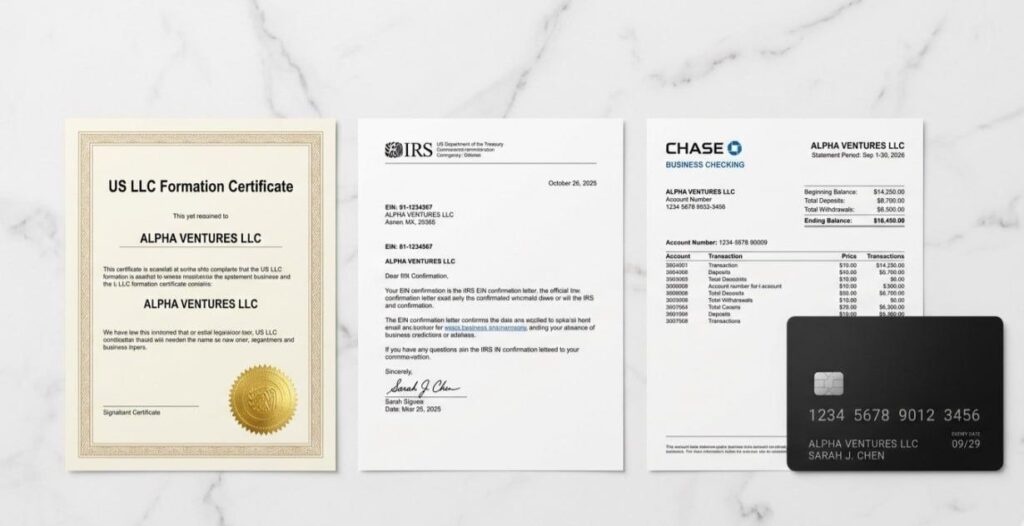
Step 1: Form your LLC. Before anything else. Your EIN is tied to your legal business entity. Without an LLC or corporation, you’re applying as a person, not a business — which defeats the entire purpose.
Step 2: Open a dedicated business bank account. Non-negotiable. Corporate card issuers link directly to this account to verify cash reserves. Revenue-based issuers review your bank statements — typically 3 months minimum. A personal account with mixed deposits won’t satisfy either requirement. For a walkthrough of how to open a US business bank account from scratch, this guide covers the process step by step.
Step 3: Get your DUNS number — free. D&B is the largest business credit bureau. Your DUNS number is how they identify your business entity. Register at no cost directly through D&B’s official website at dnb.com. Do not pay any third party to do this — the number is free and the process takes minutes online.
Step 4: Start with what you can qualify for right now. If you don’t meet the $25,000 balance threshold for corporate cards yet, start with a revenue-based fintech card. Use it for actual business expenses. Pay it consistently every month without exception.
Step 5: Add a second reporting line within 6 months. One account reporting to business bureaus is a starting point. Two or three reporting lines create meaningful profile momentum faster. Net-30 vendor accounts — where suppliers extend 30-day payment terms and report to bureaus — work well alongside an EIN-only card. For a deeper look at how tradelines function in building business credit, this guide covers the mechanics in detail.
Step 6: Graduate to better terms. After 6–12 months of clean payment history across multiple reporting lines, better corporate cards become accessible. Your D&B Paydex score — target 80 or above — does the qualifying work for you at that point.

What to Do After You Get Your First EIN-Only Card
You got approved. The card arrived. Now what? Most articles stop exactly where they should keep going.
Use it for real, recurring business expenses — not one-time purchases. Consistent monthly charges — software subscriptions, business phone lines, recurring supply orders — create the steady payment history that bureaus weight most heavily. One large purchase paid off once is far less valuable than twelve small consistent payments over the same period.
Keep utilization under 30% of your credit limit. If your card has a $10,000 limit, keep the balance below $3,000 at statement close. Ramp and Brex are charge cards — this doesn’t apply since you pay in full monthly. But for revolving cards like Capital on Tap, utilization directly affects your business credit score trajectory.
Request a credit limit increase at the 6-month mark. After six months of on-time payments, contact your issuer and request a credit limit review. A higher limit — even if you don’t use it — lowers your utilization ratio and signals growing business credibility. Capital on Tap and BILL Divvy both have formal limit review processes. Document your request and the outcome in writing.
Verify that your card is actually reporting to business bureaus — don’t assume. Within 60–90 days of getting your first card, pull your business credit report from D&B, Experian Business, and Equifax Business and confirm the account is showing up. This is not a given. According to reporting documented by Nav across thousands of small business profiles, some business cards — including those from major national banks — only report derogatory information to business bureaus, not positive payment history. If your card isn’t showing up after 90 days, contact the issuer directly. If they only report late payments, that card is not building your profile — it’s just waiting to damage it.
If you’re an immigrant, request your LexisNexis consumer disclosure file. Under the Fair Credit Reporting Act, you have the right to request your full consumer disclosure from LexisNexis — a data aggregator that supplies background information to many financial institutions. This data can affect whether fintech issuers approve or flag your application, and most applicants have no idea it exists. You can request your file at consumer.risk.lexisnexis.com/request. If you’ve received unexplained denials with strong business financials, this is often where the answer lives.
Monitor your business credit score monthly. Watch your Paydex score move toward 80+. For a foundational understanding of how the US credit scoring system works, this guide explains the basics clearly.

The “EIN-Only” Claim vs. Reality
Many cards that market themselves as “EIN-only” still pull personal credit in the background.
The distinction that matters: “doesn’t require SSN at all” versus “doesn’t run a hard pull.” These are not the same thing. A soft pull doesn’t affect your score — but it does mean your personal identity is being reviewed. If your goal is complete separation from your personal file, you need to confirm with each issuer whether any personal data is being accessed, even passively.
Ask the issuer directly before applying: “Do you report to personal credit bureaus? Do you require a personal guarantee? Do you access personal credit data in any form during underwriting?” If they can’t answer all three clearly, treat that as a red flag.
The reporting problem is real and well-documented. According to community research compiled by Nav, traditional bank-issued business credit cards typically report only derogatory information to business bureaus — not on-time payments. A business owner can maintain five years of perfect payment history and have a completely empty business credit file. The only cards that reliably report positive payment history to all three business bureaus are corporate cards and dedicated business credit-building products — not standard business cards from traditional banks.
If You’re an Immigrant or H-1B Holder Starting a Business
Mainstream financial content almost never addresses this group directly. This section is specifically for you.
If you’re on an H-1B, F-1 OPT, or any non-immigrant visa and have registered a US LLC, your personal US credit history is likely thin — not because of poor financial habits, but because you haven’t been in the system long enough. That’s a structural disadvantage built into how the US credit system works.
Ramp explicitly states on its application page that applicants without a Social Security Number can apply using a valid passport as their primary identification document. This is verified directly from Ramp’s published eligibility criteria at ramp.com/blog/business-credit-cards-with-ein-only. The business still needs to meet the $25,000 minimum bank balance requirement — but the SSN barrier is removed.
Here’s what no other site explains clearly: even if you have a US SSN and a credit score, a “thin file” — fewer than five accounts, less than two years of history — can result in the same denial outcome as having no file at all. Issuers use automated systems that score file thickness alongside FICO score. An H-1B holder who arrived two years ago with a 720 score and two accounts may receive the same automatic rejection as someone with no credit history. EIN-only corporate cards bypass this entirely because they don’t evaluate personal file thickness at all — they look at business cash or revenue, metrics where immigrant entrepreneurs often perform better than the personal credit system gives them credit for.
If your spouse is on H-4 EAD and contributing income to the household, that income can factor into your business’s financial picture as well — see how H-4 EAD work authorization affects your family’s finances.
Frequently Asked Questions
Technically, yes — sole proprietors can apply for many business credit cards using their SSN. But if your goal is an EIN-only card with no personal guarantee and no personal credit check, an LLC is functionally required. Without an incorporated entity, there’s no legal separation between you and your business. Card issuers offering no-personal-guarantee products need a distinct legal entity to extend credit to. A sole proprietorship doesn’t provide that structural separation. Forming a single-member LLC in most states costs between $50 and $500 in state filing fees — it’s the single most impactful first step in the EIN-only credit journey.
No — and this confusion causes real problems for new business owners. Your EIN is a tax identification number issued by the IRS. It identifies your business for tax purposes only. It doesn’t hold a score, carry a credit history, or connect to credit bureaus by itself. What builds your business credit profile is activity — credit lines, vendor accounts, and payment history that gets reported to D&B, Experian Business, or Equifax Business under your business’s EIN. Getting an EIN and doing nothing with it for two years leaves your business credit profile completely empty. Activity is what builds the score.
For traditional bank business loans, almost never. Banks underwriting loans to small businesses rely heavily on personal credit and personal guarantee because most small businesses don’t have sufficient financial history to underwrite on business merits alone. Revenue-based fintech lenders operate differently — some evaluate applications primarily using business bank statements and EIN without requiring SSN or personal guarantee. These products exist, but they’re typically shorter-term (3–18 months), carry higher interest rates than traditional loans, and approval is driven entirely by revenue patterns. Legitimate tool — just not a cheap one.
It depends entirely on your business’s current financial position — and the honest answer has two distinct paths. If your business generates at least $2,500/month in verifiable revenue and has been operating for six or more months, Capital on Tap is among the most accessible — soft pull only, no personal guarantee, reports to business bureaus. If your business has $25,000 or more in a US business bank account, Ramp is the most straightforward genuine EIN-only option — no SSN, no personal credit check, passport accepted. If you have neither, start with net-30 vendor accounts and a secured business card to build the foundational profile first.
Some revenue-based options approve LLCs as young as 3 months if revenue requirements are met — but that “3 months” requires 3 months of actual bank statement history showing consistent deposits, not just 3 months since LLC paperwork was filed. An LLC formed 3 months ago with no transactions and no revenue is not a 3-month-old operating business in any meaningful sense to a card issuer. What issuers are looking for is a pattern of business activity. The LLC formation date is the starting line, not the finish line.
Yes, with specifics. Ramp explicitly accepts a valid passport instead of SSN for identity verification, according to their published application guidance at ramp.com. Brex has historically offered similar flexibility for foreign founders, though their requirements have changed over time [VERIFY BEFORE PUBLISH — confirm current Brex policy at brex.com]. The business still needs to meet financial requirements — a passport doesn’t waive cash reserve or revenue thresholds. What it removes is the identity verification barrier that otherwise stops non-US citizens from completing the application.
A personal guarantee is a legal commitment that if your business fails to pay its debts, you personally will. It doesn’t just mean your credit score takes a hit — it means the creditor can pursue your personal assets: bank accounts, property, future wages. Most small business credit cards from traditional banks require personal guarantees as standard terms, often buried in the application language. The “EIN-only” designation on corporate cards specifically means this clause is absent — the creditor’s only recourse is against the business entity, not you personally. That distinction is meaningful in a failure scenario, and it’s why EIN-only corporate cards have stricter upfront financial requirements.
The Honest Bottom Line
EIN-only business credit cards aren’t a financial shortcut. They’re a legitimate tool — but only if you approach them with clear expectations.
If you have a properly formed LLC, a dedicated US business bank account, and either $25,000 in cash reserves or $2,500+/month in consistent revenue, you can get approved for a card that doesn’t touch your personal credit at all. Ramp is the most transparent about this. That is a real possibility in 2026.
If you’re starting from zero — new LLC, no revenue, no bank history — net-30 vendor accounts and secured business cards are your realistic first moves. Six to twelve months of clean history built on those foundations changes what’s accessible to you significantly.
For immigrant entrepreneurs specifically: the EIN-only path is not a workaround or a gray area. It’s a legitimate product category that exists precisely because the traditional credit system wasn’t built with your situation in mind. Using it correctly, and building from it systematically, is how you create the financial credibility that the personal credit system may not be giving you enough time to build on its own.
About the Author
Charles William is a US-based personal finance writer with over a decade of experience working alongside Certified Public Accountants and financial planners in the consumer credit and business finance space. After several years at a mid-size financial advisory firm in Texas — where he worked directly with clients navigating credit repair, debt consolidation, and LLC financial structuring — he shifted to financial education, believing most Americans struggle not from bad decisions, but because nobody ever explained the rules clearly.
During his time at the advisory firm, Charles worked with a significant number of immigrant clients — H-1B holders, L-1 visa holders, and international students transitioning to OPT — who were building businesses while simultaneously navigating visa compliance questions that their financial advisors weren’t equipped to answer. That experience is the reason USAHarmony’s business credit content is written with that specific audience in mind.
His writing references IRS publications, CFPB consumer guidance, Federal Reserve data, and official credit bureau documentation. He does not rely on secondhand summaries or affiliate-driven recommendations.
Charles is not a licensed CPA or financial advisor. Every article at USAHarmony includes a clear disclaimer encouraging readers to consult a qualified financial professional before making decisions specific to their situation.
Questions or corrections? Reach him through the USAHarmony contact page.
Disclaimer: This article is for informational purposes only and does not constitute financial or legal advice. Card terms, requirements, and availability are subject to change. Always verify directly with the card issuer before applying. Immigration compliance questions should be directed to a licensed immigration attorney.