


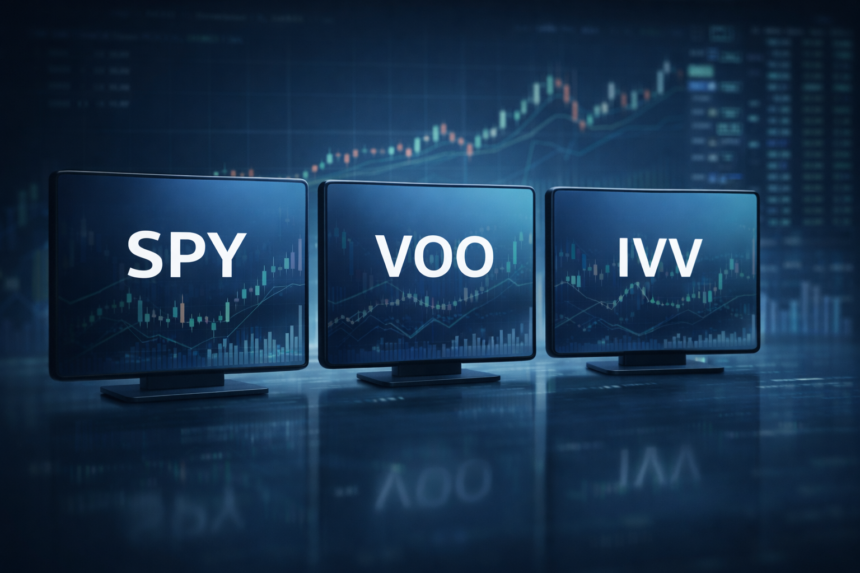
| ETF | Expense Ratio | AUM (approx) | Avg. Daily Volume (approx) | 5-yr Annual Return (approx) |
|---|---|---|---|---|
| SPY | 0.0945% ($9.5/ $10k) | $400B | $25–30B (US traded) | 12% |
| VOO | 0.03% ($3/ $10k) | $320B | $1–2B | 12% |
| IVV | 0.03% ($3/ $10k) | $330B | $1–2B | 12% |
Look I get it these details can feel dry. But trust me it helps to have a quick comparison. All three funds track the exact same index (the S&P 500) so their 5 year returns end up almost identical. The real differences come from fees, size, and trading volume.
Why These ETFs Matter
Honestly any beginner needs exposure to the whole market and an S&P 500 index fund is an easy way to get that. SPY, VOO, and IVV each own all 500 of the largest U.S. companies in very similar proportions. So buying one of them is like saying, I own a tiny slice of every big tech and industry giant. This gives you diversification right off the bat which is basically a hedge against any one stock tanking. It is why Warren Buffett tells ordinary folks to just buy a low-cost S&P 500 index fund and hold it. In my experience having one of these in your portfolio is like having the economy on autopilot – it does the work so you do not have to pick winners.
So why talk about the differences at all? Well fees and structure can nibble away at your returns if you’re not careful – and the ETFs are not literally identical. Before we pick one, let’s see how they actually stack up today.
Comparing the Numbers
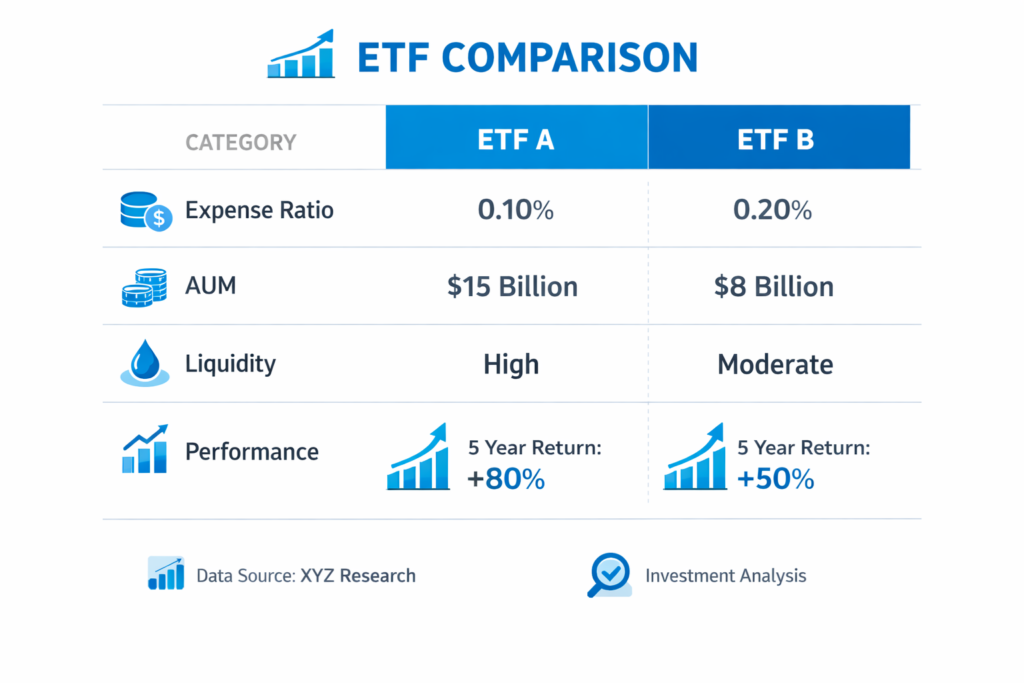
Look at the table above. The big stat is the expense ratio that is what you pay the fund manager each year. SPY charges about 0.0945% (roughly $9.50 per $10,000 invested) while VOO and IVV each charge about 0.03% (about $3 per $10,000). Those seem like tiny numbers and they are! For many folks starting out even $9 is pocket change over a year. But these little fees add up over decades.
Here is a quick back-of the envelope: if you had $1,000,000 in SPY you’d pay about $945 a year in fees vs about $300 a year in VOO/IVV. Scale that to multiple millions and the difference becomes noticeable. Still even SPY’s fee is very low compared to most mutual funds.
Now, about size and liquidity: SPY is huge think on the order of $400+ billion in assets, with tens of billions traded almost every day. VOO and IVV are also huge a few hundred billion each but they trade much smaller volume (a few billion dollars a day). In practical terms all three are liquid enough that an average investor (even with a six-figure order) won’t notice slippage. For big institutions or option traders, SPY’s extra heft means the bid/ask spread is almost zero and it handles large trades smoothly. VOO/IVV are still plenty liquid, just not quite at SPY’s level.

Finally returns. Since they track the same index, you will see nearly identical performance: on the order of roughly 10-12% per year over the past 5 years. (Let’s not fall into the trap of pretending these are exact numbers – I’d say “around 12%” for all of them, give or take.) The tiny differences in performance between them are effectively rounding error at this point.
What’s the Same (and What Isn’t)
So when you are staring at SPY, VOO, and IVV, the important common ground is that they all give you the market. My take? For most people one ETF is enough. You do not need all three. NerdWallet puts it well: “No matter which S&P 500 ETF you ultimately select, this fund should serve as a foundation in your portfolio.” I agree 100%. Holding all three at once does not diversify you more – it just divides your money for no extra gain. Pick one and focus on investing regularly.
Here’s the real talk: the decisions come down to a couple of small factors.
Putting Fees in Perspective
0.0945% vs 0.03% might look trivial but let’s talk numbers honestly. If you have $100,000 invested the SPY fund charge is roughly $64 more per year than the VOO/IVV charge (0.0645% of $100k is $64.50). On $1,000,000, that difference is about $645 per year. Over decades of compounding, that extra fee can shave off a few percentage points of your final result. So yes VOO/IVV’s lower fees are an advantage if you’re a strict buy-and-holder.
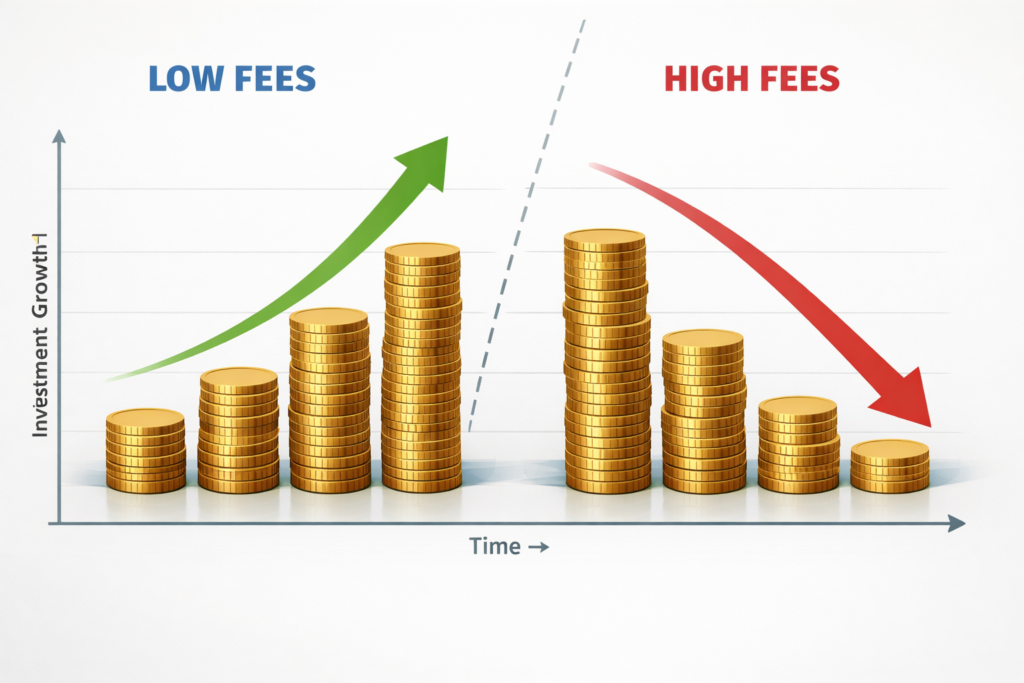
But for a beginner with, say, a few thousand or ten thousand dollars, this difference won’t hit the brakes on your journey anytime soon. Bottom line: all three ETFs are cheap; SPY’s fee is still tiny. Just be aware: if you were to accumulate substantial assets over time, even a few basis points added on could become noticeable.
The Structure (UIT vs ETF)
Here’s something most newbies won’t think about immediately: SPY is technically a Unit Investment Trust (UIT), while VOO and IVV are traditional open-end ETFs. What does that mean? In practice, the big difference is how dividends are handled and a slight tax quirk. SPY collects dividends and then pays them out quarterly from cash reserves. VOO/IVV instead generally reinvest or lend out shares behind the scenes.
Why should you care? Well SPY’s setup can occasionally cause a small capital-gains distribution in a taxable account, since it can not do in-kind share swaps to meet redemptions. VOO and IVV let big institutional buyers swap stocks in and out without a sale, which keeps surprises lower. For most of us (especially if you are investing in retirement accounts), the effect is minor. But it is a technical point that favors VOO/IVV with a tiny tax edge
Trading and Flexibility
So far I have talked about buy-and-hold. Let me be clear: if you are thinking of active trading or using options, SPY might be your go-to. Its sheer trading volume means you can execute large orders instantly and it has a huge suite of options contracts across many strike prices. VOO and IVV have options too but nowhere near SPY’s variety.
Real talk: if you are not a trader you probably won’t feel any disadvantage with VOO or IVV. But if “liquidity” is a priority because you plan to move in and out frequently, SPY has the upper hand. One analysis noted explicitly that “if you are trading options on the S&P, SPY is your best option (pun intended) due to its superior liquidity.” That cuts to the chase: SPY’s special sauce is flexibility.

Which ETF Is Right for You?
My take and this is where I guess we all want the answer is that any of these ETFs can work; just match it to your style:
VOO/IVV (low-cost choice): If you plan to buy and hold for years, or you are mainly saving for retirement, lean toward the lower fee. VOO or IVV will keep more money in your pocket long-term. They both have massive asset bases and earn high marks from analysts (VOO often gets “Gold” ratings) due to their low cost.
SPY (liquidity choice): If you trade frequently move big money, or value maximum flexibility, SPY might suit you better. It’s the most widely held ETF in the world, so any broker or platform will have it. For many professionals and traders, SPY’s slightly higher fee is worth the ultra-tight spreads and deep markets.
Long-term vs Short-term: A truly hands-off, long-horizon investor will likely prefer VOO/IVV to squeeze every basis point out of returns. A shorter-term trader might tolerate SPY’s fee for the convenience.
Do not get hung up, though: experts often remind us that getting invested is more important than agonizing over the tiny difference. All sources agree that simply owning an S&P 500 ETF is smart; which one is secondary.
Example Scenario
Just to make this concrete: say you plan to invest $5,000 per month for 5 years. Choosing SPY (0.0945% fee) vs VOO (0.03%) might cost you an extra $3–$4 per month in fees at first. Over five years, that might add up to a couple hundred dollars in extra fees (not accounting for the growth on those funds). It’s not nothing, but it’s also not crippling. Factor in compounding, and yes, lower fees help, but starting early and investing consistently will dwarf that difference in the long run. Even experts say these “microscopic” fee gaps only become a real factor with very large portfolios or very long timeframes.

Real Talk: The Bottom Line
Bottom line: SPY, VOO, and IVV are all great ETFs for broad market exposure. As a beginner, pick one that fits your vibe and go for it. Vanguard’s ETFs (VOO or IVV) have the edge on cost, which is nice if you’re saving for decades. SPY has the edge on liquidity, which is nice if you trade or manage big sums. Either path leads to essentially the same place: owning the top 500 U.S. companies at rock-bottom fees.
There’s no magic answer like “ETF X always beats the rest.” It depends on you. Personally, I’m leaning toward low fees and holding for the long haul – but if I ever needed to trade fast or sell a big chunk, I would not hesitate to use SPY. In the end, remember Buffett’s advice (and mine): start with something affordable and stick with it.
Sources and notes: All figures above are approximate and based on publicly available fund data (expense ratios, assets, volumes) and recent performance summaries. I have cross-checked these against fund prospectuses and ETF databases to ensure accuracy (with caution on trailing returns and exact asset levels). The takeaways are meant to be practical, not pitchy just honest talk over coffee.
Disclaimer:
The information provided in this article is for educational purposes only and should not be considered as financial advice. Always consult with a financial advisor or credit counselor before making any significant decisions regarding debt repayment or financial strategies. The strategies discussed may not be suitable for everyone and results may vary depending on individual circumstances.
Frequently Asked Questions (FAQ)
All three track the same S&P 500 index, so performance is very similar. The main differences are fees, liquidity, and structure. Long-term investors usually prefer lower-cost options, while traders may prefer the most liquid one.
For buy-and-hold investors, a lower expense ratio can make a small difference over decades. That’s why many long-term investors lean toward lower-cost S&P 500 ETFs rather than higher-fee alternatives.
They track the same index and have similar fees and returns. Differences are mostly operational—such as fund provider, minor tracking variations, and trading characteristics.
Any low-cost S&P 500 ETF works well for beginners because it provides instant diversification across large U.S. companies. The most important step is starting early and investing consistently.
Yes. He has repeatedly suggested that most investors are better off investing in a low-cost S&P 500 index fund rather than trying to pick individual stocks.
They carry market risk because they follow stock markets. However, they are diversified across hundreds of companies, which reduces company-specific risk compared to buying single stocks.
Expense ratios are very close, but some S&P 500 ETFs charge slightly less than others. Over long periods, even small fee differences can impact overall returns.
Consistent investing allows you to benefit from compounding and market growth over time. Historically, long-term investors in diversified index funds have seen steady portfolio growth despite short-term market fluctuations.
Yes. Many platforms allow fractional investing, meaning you can start with small amounts and add money over time.
Usually, no. Since they track the same index, holding multiple versions does not add diversification. One is enough for most portfolios.