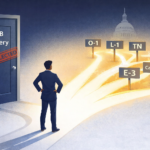



Let me be straight with you about something.
Most people reading this aren’t here because they enjoy immigration law. They’re here because something is happening — a visa expiring, a job ending, a manager who said “we’re letting people go” — and they need real answers, not a 3,000-word article that dances around the hard stuff.
So that’s what this is going to be. Real answers. No fluff. No “consult an attorney for everything” paragraph every 200 words.
Will I tell you when you genuinely need an attorney? Yes. But I’ll also tell you the stuff that’s actually straightforward, so you stop losing sleep over things that don’t require legal counsel to understand.
This article covers two things. H-1B extensions in 2026 — timeline, fees, the 240-day rule, and the travel trap nobody warns you about. And the 60-day grace period after a layoff — what it really gives you, what it doesn’t, and the specific mistakes people make in week one that cost them dearly in week eight.
Let’s get into it.
First, The Extension Piece — Because This Matters Even If You’re Not Being Laid Off
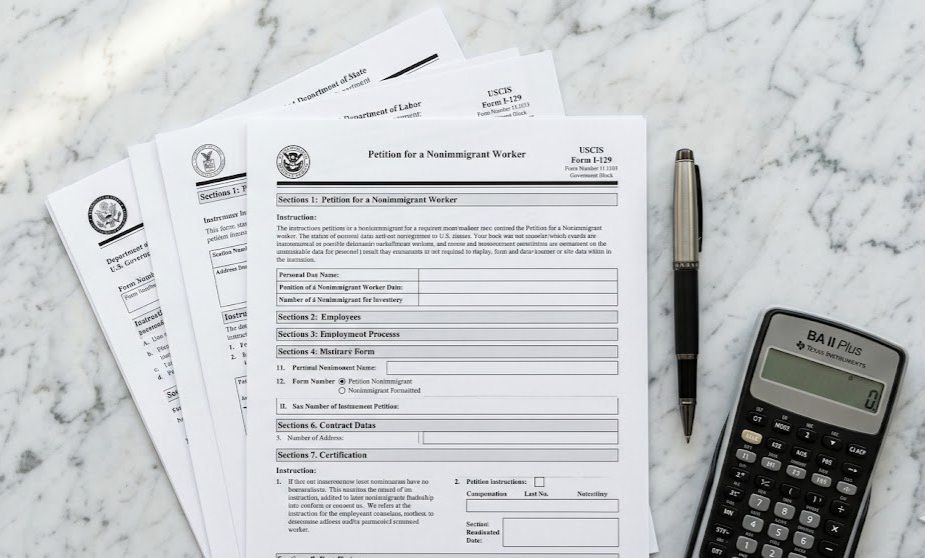
Here’s a mindset shift that helps a lot of people: stop thinking of your H-1B extension as a renewal. It’s not a subscription that auto-renews if you pay the fee. It’s a new petition review. USCIS looks at your job, your employer, your wage classification, your LCA — all of it — again.
Most extensions go through fine. But in 2026, “fine” takes longer than it used to. Processing times are up. RFE rates are higher. And if your company’s immigration team is also dealing with the new weighted lottery registrations that kicked in February 2026, they may not be moving as fast as you need them to.
The good news is that none of this is unmanageable if you start early. The problem is that most people don’t start early. They wait until 90 days before expiration, then panic when they find out filing timelines have stretched.
You can file up to six months before your status expires. That’s not a suggestion — that’s your buffer. Use it.
The Timeline: What You’re Actually Looking At in 2026
I’ll be honest — official processing times on the USCIS website are optimistic. Here’s a more realistic picture:
| Processing Type | What USCIS Says | What Actually Happens | Total Cost (Approx.) |
|---|---|---|---|
| Regular Processing | 3–5 months | 4–7 months, sometimes more | $3,000–$5,500 |
| Premium Processing | 15 business days | Usually 15–20 business days | Add $2,805 on top |
| If You Get an RFE | N/A | Add 60–90 days minimum | Same + attorney response |
| Cap-Exempt Employers | Same as above | Generally smoother, fewer RFEs | Same fee structure |
Source: USCIS processing times and USCIS fee schedule
One thing I want to flag here — if your employer is navigating the new H-1B weighted lottery rules that took effect in 2026, their immigration compliance team may be stretched. That’s not your fault. But it is your problem. Which is why you need to be the person who brings this up proactively, not the one waiting for HR to remind you.
The Money Conversation Nobody Has Transparently
Employers pay the filing fees. Workers aren’t supposed to pay — and for certain fees, it’s actually illegal to pass the cost to the employee. But knowing the numbers helps you understand why some smaller companies hesitate, and why it’s worth knowing your employer’s size before you assume they’ll move fast.
Here’s what an H-1B extension actually costs your employer in 2026:
- I-129 base filing fee: $730
- ACWIA training fee: $750 (under 25 employees) or $1,500 (25+ employees)
- Fraud prevention fee: $500
- Asylum program fee: $600 for most private employers
- Premium processing (optional): $2,805
- Attorney fees: typically $1,500 to $3,500
Add it up and you’re looking at somewhere between $3,500 and $9,000+ depending on your situation. For a 500-person company, that’s nothing. For a 12-person startup, that’s a conversation they need to have internally before they commit.
And that $100,000 per-petition fee you may have read about? That’s from the Presidential Proclamation targeting new H-1B petitions. It doesn’t apply to extensions for existing holders — though it’s still facing active legal challenges and the situation could evolve.
The 240-Day Rule: The Safety Net That Has One Very Specific Catch
A lot of people have heard of the 240-day rule. Far fewer understand the travel piece — and that’s the part that bites people.
Here’s the rule in plain language: if your employer files your extension petition before your I-94 expires, you’re allowed to keep working for the same employer for up to 240 days past that expiration while USCIS takes its time deciding.
It’s a real protection. It exists exactly because USCIS processing times have historically been longer than the status periods they’re reviewing.
But here’s what it does NOT do — and this is the part people miss:
It does not give you a valid visa for re-entry into the United States.
Your visa stamp — the physical sticker in your passport — is what gets you back into the country after international travel. If your visa stamp has expired, or if you travel while your extension is pending and then try to come back in, you can’t. You’d need to go to a U.S. consulate abroad, apply for a new visa stamp, sit through an interview, and wait — sometimes weeks.
I’ve seen people book flights to visit family in India, thinking their pending extension covered them for re-entry. It doesn’t. The I-797 receipt notice and the 240-day rule are about your status inside the U.S. — not your ability to get back in.
If you have any international travel planned while an extension is pending, talk to an immigration attorney before you book anything. Seriously. A round trip to see your parents can turn into a months-long wait at a consulate if the timing is wrong. For a detailed look at what the consular stamping process looks like right now, the H-1B visa stamping 2026 guide covers it thoroughly.
Other important things about the 240-day rule:
- You must be working for the same employer in the same role
- If the employer withdraws the petition, the protection ends immediately
- If USCIS denies the petition, the protection ends — and any days you worked after that denial could become a problem
- It does not apply if the extension was filed late (after your status already expired)
That last point is more common than you’d think. Employers sometimes miss the filing window because of internal delays, attorney scheduling issues, or just plain oversight. If your extension was filed late, the 240-day rule does not save you, and you may have already accrued unlawful presence without realizing it. If you’re in that situation — talk to an attorney this week, not next month.

The 60-Day Grace Period: What It Actually Is
In 2017, USCIS codified a rule that H-1B workers who lose their job aren’t immediately out of status. They get a 60-consecutive-day grace period — meaning you stay in valid immigration status for 60 days after your employment ends, even though the job is gone.
Before this rule existed, your status technically ended the moment your employment did. Zero days. The 60-day rule was a genuine improvement.
But I want to be careful not to oversell it, because here’s what those 60 days actually give you:
✅ Valid immigration status ✅ Time to find a new employer and file a transfer ✅ Time to apply for a change of status to another visa category ✅ Time to make an organized exit from the country if needed
What it does NOT give you:
Authorization to work — that ended when your job ended Permission to freelance, consult, or do gig work Any flexibility on the 60-day timeline itself Multiple grace periods within the same visa validity period
People sometimes assume the grace period is like a transition period where you can pick up some freelance work while job hunting. It’s not. Any paid work during those 60 days — even one invoice, even a small consulting project — is unauthorized employment. The immigration consequences of that are significantly worse than the financial benefit of the work.
The Clock: When It Actually Starts (This Part Matters a Lot)
Your 60-day grace period starts on your employment termination date. Not your last day in the office. Not the day HR sent the confirmation email. Not when your severance period ends.
The termination date.
In tech layoffs especially — where employees are often walked out the same day the announcement is made — people lose a week or two assuming the clock starts from their last worked day. By the time they figure out the actual count, they’ve got 46 days instead of 60.
Get the exact termination date in writing from HR. Today, if possible. That date is your anchor for every decision you make over the next two months.
One more thing about the clock: the 60-day grace period can only be used once per authorized validity period. If you use it, find a new employer, transfer your H-1B, and then get laid off again at the new company — a fresh grace period begins tied to the new petition’s validity period. The rule resets with each new petition. But you cannot bank unused days, pause the clock, or roll over time from a previous grace period.
Your Real Options, Honestly Assessed
Option 1: H-1B Transfer to a New Employer (The Best Path If You Can Make It Work)
If a new employer can file a transfer petition within your 60-day window, you’re in good shape. Under H-1B portability rules, you can actually start working for the new employer as soon as the petition is filed — not when it’s approved. So even if USCIS takes three months to approve it, you can legally work from day one of the filing if everything was filed within the grace period.
The hard part is finding an employer who can move that fast. Not every company has an immigration attorney on speed dial or an HR team that’s done this before. Some can turn around a filing in two to three weeks. Others take two to three months just to get the job offer finalized.
Be upfront with potential employers about your timeline. The good ones will understand and move accordingly. If a company says they can’t file for 90 days, they can’t solve your current problem.
Option 2: Change of Status (Buying Time, Not Solving the Problem)
If your spouse is on an H-1B, you may be able to switch to H-4 status. Depending on your spouse’s employer and whether an I-140 is already approved, you might also qualify for an H-4 EAD — which does give you work authorization, though it takes time to process.
If you came to the U.S. as a student originally, F-1 reinstatement might be an option — but it requires school enrollment and has its own timeline considerations.
B-1/B-2 visitor status is available as a bridge, but you absolutely cannot work on it. It’s useful if you need more time to figure out next steps or wrap up personal matters before leaving — not as a way to continue your job search while employed.
Option 3: Plan a Clean Exit
This is the conversation nobody wants to have. But if 60 days pass and you haven’t had a petition filed or a change of status approved, you’re out of status. Every day after that is unlawful presence — and depending on how much accumulates, you could face a 3-year or 10-year bar from returning to the U.S.
Leaving voluntarily before the 60 days expire leaves your record clean. It’s a painful outcome, but it’s a recoverable one. Overstaying isn’t.
The Financial Reality That Hits At the Same Time
Here’s what nobody wants to combine in one article — but it’s reality. A layoff isn’t just an immigration problem. It’s a financial shock that arrives at the exact moment your immigration stress is highest.
If you’ve been in the U.S. for a few years on H-1B, you’ve built something financially. Credit history, bank accounts, maybe some savings or investments. Suddenly having zero income for 60 days — or longer — changes the math on everything.
A few practical thoughts:
Credit: Your credit score doesn’t collapse overnight from a job loss. But if you have credit card balances and no income coming in, those balances can become a real problem fast. Before the pressure builds, it’s worth knowing your options for managing and paying down credit card debt during reduced income periods. And if you’re carrying debt across multiple cards, strategies for tackling it systematically can help you prioritize without panic.
Credit score monitoring: During a job search, your credit profile affects more than credit cards. Apartment applications, car rentals, sometimes even background checks — they all touch your credit. Knowing where your credit score stands and what’s influencing it gives you one less unknown.
Banking access: If you haven’t already established a U.S. bank account that isn’t tied directly to payroll from your now-former employer, doing that is a practical priority. Some people discover during a layoff that their only accessible account required active employment status with a specific company.
For those newer to the U.S. financial system: If you’re still building credit history here, understanding how H-1B holders can build credit strategically matters — because your financial flexibility during a job transition is directly tied to it. If you’re starting from scratch with credit, first credit card options for Indian immigrants is worth looking at.
240-Day Rule vs. 60-Day Grace Period: Side by Side
These two rules are completely different things, and they get mixed up constantly. Here’s the clearest comparison I can give you:
| 240-Day Rule | 60-Day Grace Period | |
|---|---|---|
| What triggers it | A timely filed extension petition | Your employment ending |
| What it protects | Your ability to keep working | Your legal status only |
| Can you work? | Yes — same employer, same role | No — not at all |
| Can you travel abroad? | Technically, but you can’t re-enter on an expired stamp | Technically yes — but it’s risky |
| How long does it last | Up to 240 days | Exactly 60 consecutive days |
| Who controls the timeline | USCIS processing speed | Your termination date |
| Does it reset? | Yes, with each new petition | Yes, with each new valid H-1B period |
| Most common mistake | Traveling internationally and getting stuck abroad | Assuming the clock starts from last paycheck date |
What About Your Green Card If You’re Laid Off?
This depends entirely on where you are in the process — and the answer ranges from “this is fine, we can work with it” to “you may need to restart from scratch.”
If your I-140 is already approved: That approval generally survives a layoff and even a job change, as long as you find a new employer in a similar occupational category and can port the petition. The priority date you’ve been waiting on stays with you.
If PERM hasn’t been filed yet: The employer’s labor certification is tied to that specific employer. A layoff ends it. A new employer would need to restart the process — new PERM, new I-140. That’s frustrating, especially if you’ve been waiting on a priority date that doesn’t transfer in this stage.
If you’re in the middle of PERM review: Also complicated. Talk to an attorney quickly.
The green card path from H-1B is a long one for most people — especially those from countries with heavy employment-based backlogs. But a layoff doesn’t necessarily end it. It depends on your stage and how fast you can land in a new sponsoring role.
FAQ: The Questions People Are Actually Asking
No. Your work authorization ended with your employment. It doesn’t matter if it’s a small freelance invoice, a consulting project for a former client, or a gig platform job. Any paid work during those 60 days is unauthorized employment, and the immigration consequences are significantly worse than whatever you’d earn. I know that’s hard to hear when income has stopped — but this is a line you genuinely cannot cross.
No. Severance is a financial payment, not continued employment. Your grace period started on your termination date. Check your termination letter for that exact date — it matters.
You have a few options. You could apply for a change of status to B-1/B-2 before the 60 days expire, then have the new employer file a transfer once you have valid status. This requires careful coordination and, honestly, an attorney who can sequence the filings correctly. Don’t try to piece this together alone.
H-4 status is derivative — it follows the primary H-1B holder. If the primary holder’s extension is filed on time and the 240-day rule applies to them, the H-4 dependents are generally covered under that same filing. H-4 holders can’t independently invoke the 240-day rule on their own.
No. The 240-day rule only applies when the extension was filed before your status expired. If it was filed late, you may already be accruing unlawful presence. This needs an attorney this week — not when you get around to it.
Not through the grace period itself. However, if you file for a change of status before the 60 days are up, you’ll be in a “period of authorized stay” while that application is pending — which extends your time in the U.S. lawfully. That doesn’t restore work authorization, but it does prevent unlawful presence from accumulating while USCIS processes your change of status application.
Your extension approval updates your I-797 and your status. If your visa stamp hasn’t expired and you’re not traveling internationally, you don’t automatically need a new stamp. But if you travel and your stamp is expired — or if you’re traveling while an extension is pending — you’ll need a new stamp from a consulate before re-entering. What that process looks like right now in 2026 is covered in detail in the H-1B stamping guide for Indian professionals and the general H-1B stamping guide for 2026.
This is a situation where the 240-day rule and the 60-day grace period can intersect in complicated ways. If an extension was pending when you were laid off, the 240-day rule stops applying because you’re no longer employed by the petitioning employer. What happens next depends on whether the employer withdraws the petition and the exact sequence of events. Genuinely — attorney territory. Don’t guess on this one.
Practical Checklist: What to Do Based on Your Situation
If you’re approaching an H-1B extension:
- ☐ Confirm your I-94 expiration date at cbp.dhs.gov/I94 — don’t rely on your I-797 alone
- ☐ Tell your employer / HR at least six months before that date
- ☐ Verify your job title, SOC code, and wage level are correctly classified
- ☐ Check whether your visa stamp will still be valid if you plan to travel
- ☐ Decide on premium vs. regular processing based on your travel and work timeline
- ☐ Keep copies of your I-797, LCA, all prior approval notices, and I-94 records in one place
If you just got laid off:
- ☐ Get your exact termination date in writing from HR — today
- ☐ Write that date down. Your 60-day clock started then, not when you found out
- ☐ Do not work in any capacity — not freelance, not consulting, nothing
- ☐ Contact an immigration attorney in week one, not week seven
- ☐ Assess your realistic options: transfer, change of status, or departure
- ☐ Check your I-140 status if you were in a green card process
- ☐ Review your finances — outstanding credit, monthly obligations, emergency reserves
- ☐ If you’re carrying credit card debt, understand your options now before the pressure builds
- ☐ Make sure your bank accounts are accessible independently of your former employer’s payroll

The Part I Actually Want You to Walk Away With
Every person I’ve talked to who got through an H-1B extension smoothly — or navigated a layoff without losing status — had one thing in common. They didn’t wait until the situation was urgent to start understanding their options.
Not because they were especially organized. But because they learned, earlier than most, that immigration status is not something your employer monitors for you. HR cares about your employment. Your attorney cares about your filings. But nobody is tracking your I-94 expiration date with the same stakes that you have.
Know your dates. Know your options. Know what triggers what. And when something feels unclear — whether it’s your wage level classification, your travel plans during a pending extension, or what the 60-day clock actually means for you specifically — ask someone qualified before you assume.
The decisions that feel small in week one often define everything in week eight.
Disclaimer: This article is for informational purposes only. It is not legal advice and does not create an attorney-client relationship. Immigration law is highly specific to individual circumstances, and the rules referenced here reflect publicly available information as of early 2026. Regulations, fees, and processing timelines can change. Always consult a licensed U.S. immigration attorney before making any immigration-related decisions. USAHarmony.com is an informational resource only and does not provide legal representation or immigration services.